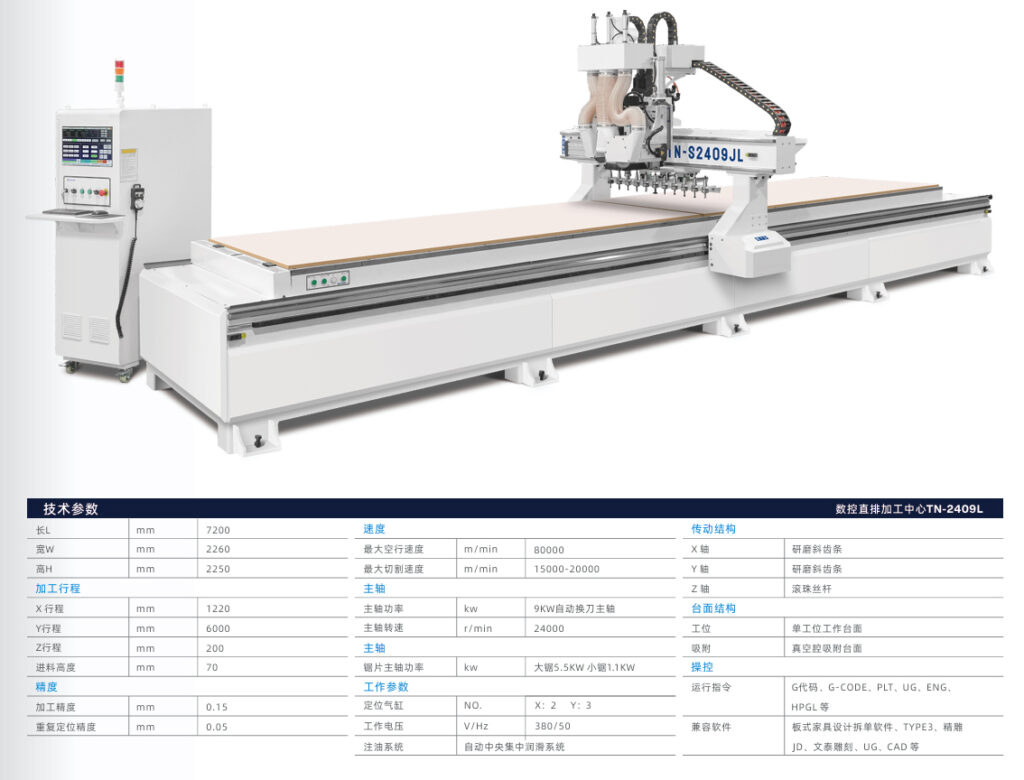
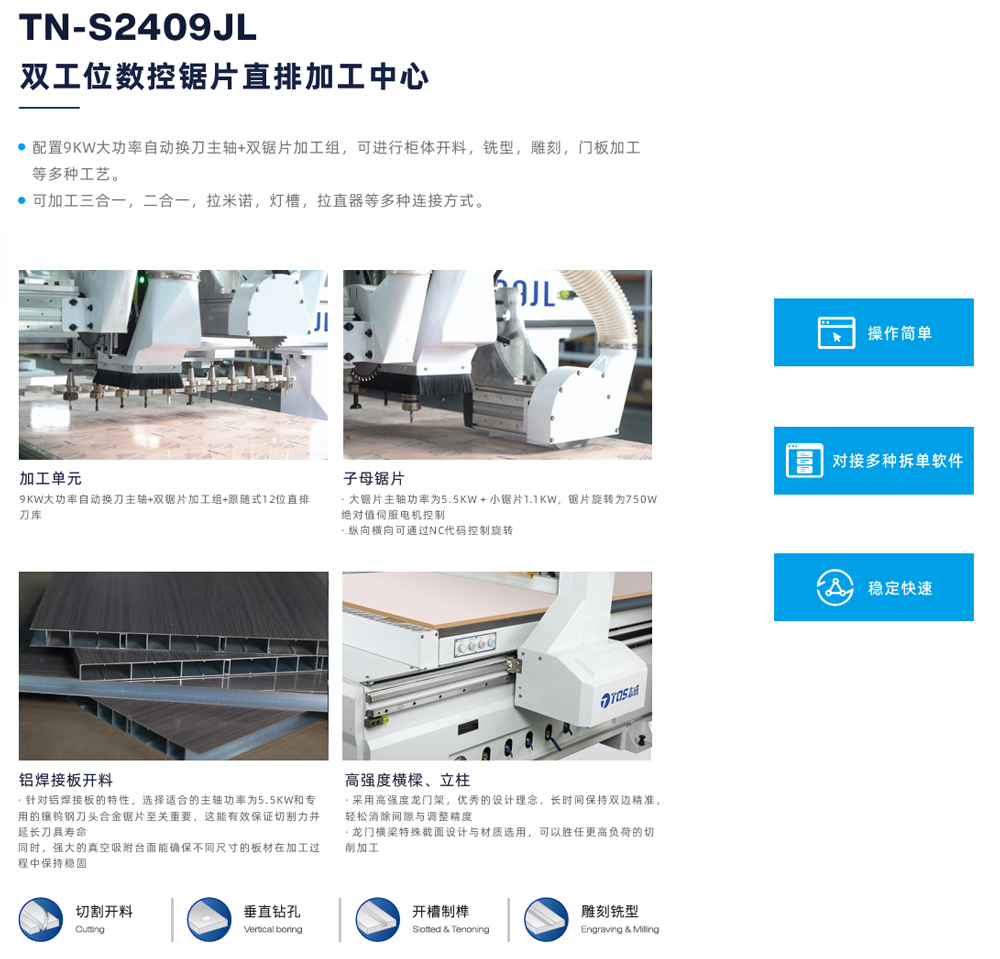
The aluminum cabinet market includes kitchen cabinets, bathroom cabinets, wardrobes, storage cabinets, office cabinets, and customized furniture. As production volumes increase, manufacturers are looking for equipment that can reduce repetitive manual work while maintaining dimensional accuracy.
An Automatic Aluminum Cabinet Production Line integrates multiple machines into a coordinated manufacturing workflow. With automatic feeding, CNC processing, material transfer, barcode tracking, and digital production management, manufacturers can create a flexible production system suitable for both standard and customized cabinets.
What Is an Automatic Aluminum Cabinet Production Line?
An automatic production line connects different manufacturing operations through mechanical, electrical, and software systems.
A typical workflow is:
Raw Aluminum Profiles → Automatic Feeding → Cutting → CNC Drilling → Milling → Panel Processing → Sorting → Assembly → Quality Inspection
The actual configuration depends on the cabinet structure and production requirements.
Automatic Profile Feeding
The first stage can use an automatic loading and feeding system.
Profiles are stored according to material type and dimensions. The feeding mechanism transfers them into the cutting machine.
Servo-controlled positioning can provide consistent feeding accuracy.
Automatic feeding also reduces the need for operators to repeatedly measure and position long aluminum profiles.
CNC Cutting
After feeding, the aluminum profile is cut according to the production order.
CNC-controlled cutting allows different component lengths to be processed in sequence.
The production system can receive cutting data from a digital order or production management system.
CNC Drilling and Milling
After cutting, the profile enters the CNC machining section.
The machine can perform drilling, milling, slotting, tapping, and other operations.
For example, a cabinet frame may require several holes for corner connectors and screws, while a cabinet door profile may require hinge or handle-related processing.
Panel Processing
If the cabinet uses aluminum panels or composite panels, a separate panel-processing section can be integrated.
Depending on the panel design, operations can include cutting, routing, grooving, drilling, trimming, and bending.
Automatic Component Sorting
One of the challenges of customized cabinet manufacturing is keeping components organized.
An automatic sorting system can identify components using barcode or QR-code information.
Each component can then be assigned to the correct cabinet order.
This is particularly useful when dozens of cabinet designs are processed simultaneously.
Assembly
Assembly can remain manual or be partially automated.
Automatic screw fastening and riveting systems can be introduced when product structures are sufficiently standardized.
For highly customized products, manual assembly may remain more flexible.
Typical Technical Parameters
| Parameter | Reference Configuration |
|---|---|
| Production Type | Aluminum Cabinet |
| Material | Aluminum Profile / Aluminum Panel |
| Profile Length | Up to 6000 mm |
| CNC Axes | 3–5 Axis |
| Spindle Power | 3–9 kW |
| Spindle Speed | 6000–24000 rpm |
| Positioning Accuracy | ±0.05–0.10 mm |
| Repeatability | ±0.02–0.05 mm |
| Automatic Feeding | Servo Controlled |
| Component Identification | Barcode / QR Code |
| Control System | PLC + CNC / HMI |
| Automatic Material Transfer | Optional |
| Automatic Sorting | Optional |
| Automatic Assembly | Optional |
The final specifications should be customized according to the actual equipment design.
Advantages of Automatic Production
Reduced Repetitive Labor
Automatic feeding, cutting, drilling, and material transfer can reduce repetitive operator tasks.
Improved Consistency
Digital positioning reduces variation caused by manual measurement.
Flexible Production
CNC programs allow different cabinet designs to be manufactured on the same system.
Better Material Management
Barcode tracking helps maintain component identification throughout production.
Scalable Automation
Factories can start with automatic cutting and CNC machining and later add sorting and assembly automation.
Smart Manufacturing Integration
An advanced aluminum cabinet factory can connect the production line to digital systems.
CAD data can be converted into production information.
ERP software can manage customer orders and material purchasing.
MES software can track production progress.
Barcode systems can identify components.
Together, these systems create a digital manufacturing workflow.
What Buyers Should Request from Suppliers
When evaluating an Automatic Aluminum Cabinet Production Line, buyers should request:
- Complete machine layout
- Production process diagram
- Machine specifications
- Cycle-time calculations
- Electrical requirements
- Air consumption
- Factory space requirements
- Software architecture
- Installation requirements
- Operator requirements
- Maintenance schedule
- Spare parts list
It is also useful to provide the supplier with actual cabinet drawings before finalizing the technical proposal.
Conclusion
An Automatic Aluminum Cabinet Production Line combines aluminum profile processing, CNC machining, panel processing, sorting, and assembly into an integrated system.
The most effective automation strategy depends on production volume, cabinet design, customization level, labor requirements, and future expansion plans. A modular architecture allows manufacturers to increase automation gradually while maintaining flexibility for customized aluminum furniture production.