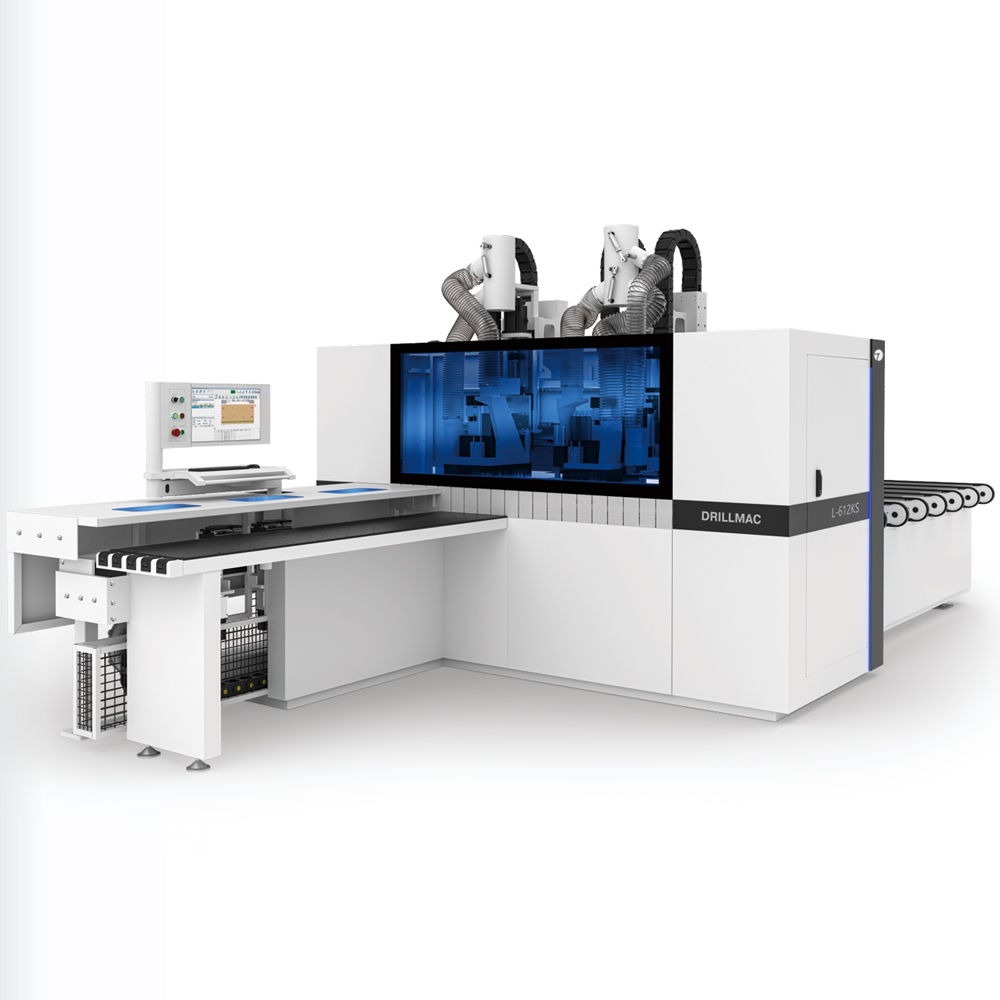
1. Introduction to Edge Banding Machines
An Edge Banding Machine is an industrial processing machine designed to apply protective and decorative materials to the exposed edges of panels. It plays an essential role in furniture manufacturing, aluminum furniture production, composite panel processing, architectural decoration, and sandwich panel manufacturing.
During panel production, cutting and machining operations expose the internal structure of the material. These unfinished edges may affect product appearance, structural protection, moisture resistance, and service life. An edge banding machine solves these problems by applying edge materials such as PVC, ABS, acrylic, veneer, solid wood strips, aluminum profiles, or specialized sealing components.
Modern automatic edge banding machines integrate multiple operations, including adhesive application, edge material feeding, pressing, end trimming, rough trimming, fine trimming, scraping, and polishing. These integrated processes improve manufacturing efficiency and provide consistent edge quality.
With the development of lightweight composite materials, industrial edge banding technology is also expanding beyond traditional wooden furniture panels to aluminum honeycomb panels, FRP sandwich panels, PVC foam boards, and other engineered composite products.
2. How Does an Edge Banding Machine Work?
An automatic edge banding machine typically operates through a continuous processing sequence. Different machine configurations may include additional functions depending on the panel material and production requirements.
Main Processing Steps
1. Panel Feeding
The workpiece enters the machine through an automatic conveyor or feeding system. Positioning devices help maintain stable panel movement and processing accuracy.
2. Adhesive Application
The machine applies adhesive to the panel edge or edge banding material. Common bonding systems include EVA hot melt adhesive and PUR adhesive.
3. Edge Material Feeding
The edge banding material is automatically supplied and positioned along the panel edge. The feeding mechanism controls material alignment and cutting length.
4. Pressing and Bonding
Pressure rollers press the edge material against the panel surface, ensuring sufficient contact and adhesive distribution.
5. End Trimming
Excess edge material extending beyond the front and rear ends of the panel is removed.
6. Rough and Fine Trimming
Trimming units remove excess material and create a smooth, consistent edge profile.
7. Scraping and Polishing
Scraping removes minor machining marks, while polishing improves the final appearance of the edge.
For specialized composite panels, additional operations such as edge folding, milling, mechanical fastening, and edge sealing may be required.
3. Main Types of Edge Banding Machines
Edge banding machines can be classified according to automation level, bonding technology, and processing application.
| Machine Type | Main Features | Typical Applications |
|---|---|---|
| Manual Edge Banding Machine | Simple operation and flexible processing | Small workshops and repairs |
| Semi-Automatic Edge Bander | Partial automation and moderate production capacity | Small and medium furniture factories |
| Automatic Edge Banding Machine | Integrated feeding, bonding, trimming and polishing | Industrial furniture manufacturing |
| CNC Edge Banding Machine | Programmable processing and precise control | Complex panel profiles and customized furniture |
| PUR Edge Banding Machine | Uses reactive polyurethane adhesive | Moisture-resistant furniture panels |
| Laser Edge Banding Machine | Activates a functional edge layer using laser technology | High-end seamless furniture panels |
| Specialized Panel Edge Processing Machine | Customized processing for specific panel structures | Honeycomb and composite panels |
Selecting the correct machine depends on the panel material, production volume, edge material, bonding requirements, and required finishing quality.
4. Different Edge Banding Technologies
Adhesive technology directly influences bonding strength, production efficiency, and finished product performance.
EVA Hot Melt Edge Banding
EVA (Ethylene Vinyl Acetate) hot melt adhesive is widely used in conventional furniture manufacturing. It offers relatively low equipment investment, straightforward operation, and good compatibility with common MDF and particleboard panels.
However, EVA bonding performance may be affected by high temperatures and prolonged moisture exposure.
PUR Edge Banding
PUR (Polyurethane Reactive) adhesive reacts with moisture to form a cross-linked bonding structure. Compared with conventional EVA systems, PUR edge banding generally provides improved resistance to moisture and heat.
It is commonly selected for kitchen cabinets, bathroom furniture, and other applications requiring enhanced bonding durability.
Laser Edge Banding
Laser edge banding uses laser energy to activate a functional polymer layer on specially designed edge materials. This creates a visually seamless connection without conventional hot melt adhesive application.
It is suitable for premium furniture manufacturing where appearance and joint quality are important.
5. Industrial Applications of Edge Banding Machines
The applications of edge banding equipment extend across several manufacturing industries.
| Industry | Processed Materials | Typical Products |
|---|---|---|
| Furniture Manufacturing | MDF, plywood, particleboard | Cabinets, wardrobes, desks |
| Aluminum Furniture | Aluminum panels and profiles | Aluminum cabinets and doors |
| Honeycomb Panel Manufacturing | Aluminum honeycomb composite panels | Wall panels, ceilings, furniture panels |
| Transportation | FRP and lightweight sandwich panels | Truck bodies, railway interiors |
| Marine Industry | FRP, honeycomb and insulated panels | Ship interior walls and ceilings |
| Architectural Decoration | ACP, HPL and decorative boards | Wall cladding and partition panels |
Aluminum Honeycomb Panel Processing
Aluminum honeycomb panels consist of two face sheets bonded to a lightweight aluminum honeycomb core. Their edges require specialized treatment to protect the internal core structure and achieve a finished appearance.
Depending on the panel design, manufacturers may use aluminum edge strips, folded aluminum sheets, adhesive bonding, mechanical fastening, or dedicated edge sealing systems.
Consequently, an Aluminum Honeycomb Panel Edge Banding Machine may require customized feeding, positioning, bonding, folding, or pressing mechanisms rather than a conventional woodworking configuration.
Composite Sandwich Panel Processing
FRP sandwich panels and foam core composite panels also require specialized edge processing. Materials such as PVC foam, PET foam, XPS foam, and polyurethane foam may have different bonding and machining characteristics.
The selected equipment should consider core density, panel thickness, face sheet material, adhesive compatibility, and edge protection requirements.
6. Important Technical Specifications When Selecting an Edge Banding Machine
Before purchasing an industrial edge banding machine, manufacturers should evaluate the following technical parameters.
| Parameter | Typical Considerations |
|---|---|
| Panel Thickness | Depending on the machine configuration |
| Minimum Panel Size | Determined by feeding and positioning systems |
| Edge Banding Thickness | Depends on the edge material and machine design |
| Feeding Speed | Affects production capacity |
| Adhesive System | EVA, PUR or specialized bonding systems |
| Trimming System | Rough trimming, fine trimming and corner rounding |
| Control System | Manual, PLC or CNC |
| Processing Accuracy | Depends on machine structure and material stability |
| Customization | Panel dimensions, edge geometry and special processing requirements |
There is no universal machine specification suitable for every panel. For example, processing a 25 mm MDF board is fundamentally different from processing a 30 mm aluminum honeycomb sandwich panel. Equipment selection should therefore be based on actual production samples and technical requirements.
7. How to Choose the Right Edge Banding Machine
Choosing the right equipment requires a systematic evaluation of manufacturing conditions.
First, identify the panel structure and material composition. Wood-based panels, aluminum composite panels, FRP sandwich panels, and foam core panels have different edge processing requirements.
Second, determine the required edge treatment method. Conventional adhesive bonding, PUR bonding, aluminum strip installation, edge folding, and mechanical sealing require different equipment configurations.
Third, evaluate production capacity. Small workshops may benefit from semi-automatic machines, while large factories generally require automatic feeding and integrated processing systems.
Finally, consider maintenance requirements, spare parts availability, adhesive compatibility, and the possibility of future production upgrades.
8. Conclusion
An Edge Banding Machine is an essential piece of equipment for modern panel manufacturing. From traditional furniture production to aluminum honeycomb panels and industrial composite sandwich panels, edge processing technology directly affects product appearance, durability, and manufacturing efficiency.
As lightweight composite materials become increasingly popular in construction, transportation, marine engineering, and furniture applications, demand for specialized panel edge processing equipment continues to expand.
Manufacturers should select equipment according to panel structure, edge treatment technology, bonding requirements, and production capacity to achieve reliable and consistent processing performance.
Looking for an industrial edge banding solution? Choosing a machine designed for your specific panel materials and manufacturing process can help improve production efficiency, edge quality, and long-term operational performance.