Introduction
As global manufacturing continues to evolve, metal fabricators face increasing pressure to deliver higher volumes, tighter tolerances, shorter lead times, and superior product quality. Industries such as automotive, aerospace, construction, shipbuilding, renewable energy, and heavy equipment manufacturing are demanding more precision-engineered components than ever before. To remain competitive in this rapidly changing environment, fabricators are turning to high-speed metal cutting machines as a critical solution for improving productivity and operational efficiency.
High-speed metal cutting technology has transformed modern fabrication facilities by enabling faster processing rates, reduced material waste, improved accuracy, and lower production costs. Whether processing steel coils, stainless steel sheets, aluminum plates, or specialty alloys, advanced cutting systems allow manufacturers to meet growing market demands while maintaining consistent quality standards.
This article explores how high-speed metal cutting machines are helping fabricators increase production capacity, optimize workflows, and achieve long-term business growth.
The Growing Challenges Facing Metal Fabricators
The metal fabrication industry is experiencing several significant challenges:
Rising Customer Expectations
Customers increasingly expect:
- Faster order fulfillment
- Higher product quality
- Custom dimensions and specifications
- Competitive pricing
- Consistent repeatability
Meeting these expectations requires production systems capable of delivering large quantities without sacrificing precision.
Labor Shortages
Many manufacturing sectors are facing shortages of skilled machine operators and technicians. As experienced workers retire, companies must rely more heavily on automation and intelligent machinery to maintain productivity levels.
Increased Material Costs
Steel, aluminum, copper, and stainless steel prices have experienced significant fluctuations in recent years. Fabricators must maximize material utilization and minimize scrap generation to protect profit margins.
Competitive Global Markets
Global competition means manufacturers must continuously improve efficiency and reduce production costs. Companies that fail to modernize often struggle to compete against facilities equipped with advanced automated equipment.
High-speed cutting machines directly address many of these challenges by increasing throughput while reducing labor requirements and material waste.
What Are High-Speed Metal Cutting Machines?
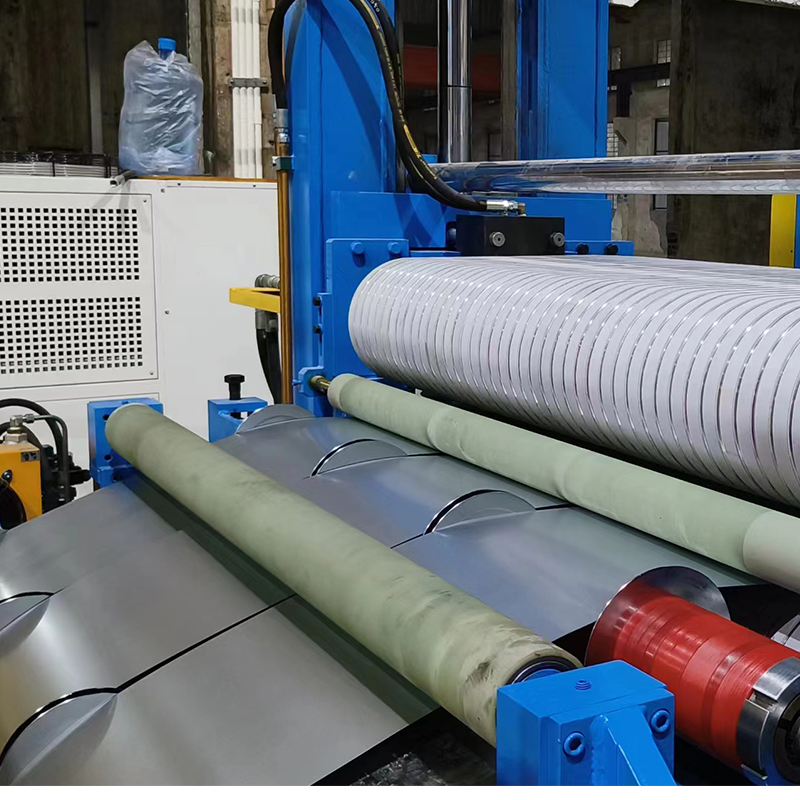
High-speed metal cutting machines are advanced manufacturing systems designed to process metal materials at significantly faster rates than conventional equipment.
Common categories include:
- High-speed slitting lines
- Flying shear cutting systems
- Rotary shear cutting machines
- Laser cutting machines
- Plasma cutting systems
- High-speed cut-to-length lines
- CNC metal cutting centers
- Precision blanking lines
These machines utilize sophisticated control systems, servo motors, precision blades, and automated handling equipment to achieve rapid production speeds while maintaining dimensional accuracy.
Modern systems can process a wide range of materials including:
- Carbon steel
- Stainless steel
- Galvanized steel
- Silicon steel
- Aluminum
- Copper
- Titanium alloys
- High-strength steels
Increasing Production Throughput
One of the most significant advantages of high-speed metal cutting machines is their ability to dramatically increase throughput.
Faster Processing Speeds
Traditional cutting equipment may become a bottleneck in production. Modern high-speed systems can process materials at speeds exceeding:
- 80–200 meters per minute for slitting lines
- 100–300 cuts per minute for flying shear systems
- Thousands of precision cuts per hour in automated production lines
These performance improvements allow manufacturers to fulfill larger orders without expanding facility space.
Reduced Cycle Times
Advanced cutting machines reduce the time required for:
- Material feeding
- Positioning
- Cutting
- Stacking
- Discharge
Shorter cycle times translate directly into higher daily output and increased revenue potential.
Continuous Production Capability
Many high-speed systems are designed for continuous operation, minimizing interruptions and maximizing equipment utilization.
Features such as:
- Automatic coil loading
- Non-stop feeding systems
- Intelligent tension control
- Automated scrap handling
help maintain consistent production throughout multiple shifts.
Enhancing Precision and Product Quality
Speed alone is not enough in modern fabrication. Customers also require high levels of accuracy and consistency.
Advanced Motion Control Systems
Modern machines utilize:
- Servo-driven positioning
- CNC controls
- Closed-loop feedback systems
- Digital monitoring technologies
These systems ensure precise cuts even at high operating speeds.
Tight Dimensional Tolerances
High-speed cutting equipment can consistently achieve:
- Accurate cut lengths
- Precise strip widths
- Smooth edge quality
- Minimal dimensional variation
This reduces the need for secondary processing and improves overall manufacturing efficiency.
Better Surface Protection
Advanced feeding and handling systems minimize:
- Surface scratches
- Material deformation
- Edge damage
This is particularly important when processing:
- Stainless steel
- Pre-painted steel
- Decorative aluminum panels
- Architectural metal products
Supporting High-Strength and Advanced Materials
Modern industries increasingly rely on advanced materials that offer superior strength-to-weight ratios.
Examples include:
- Advanced high-strength steel (AHSS)
- Dual-phase steel
- Electrical steel
- Aerospace-grade aluminum alloys
These materials often present cutting challenges due to their hardness and mechanical properties.
Optimized Cutting Technology
High-speed machines incorporate:
- Hardened cutting tools
- Precision blade geometry
- Automated clearance adjustment
- Intelligent load monitoring
These features ensure efficient processing without excessive tool wear.
Consistent Edge Quality
Proper cutting performance reduces:
- Burr formation
- Edge cracking
- Material distortion
This improves downstream manufacturing processes such as welding, forming, and assembly.
Reducing Material Waste
Material utilization is a major factor in fabrication profitability.
Precision Cutting Minimizes Scrap
Modern cutting systems provide highly accurate positioning and measurement capabilities.
Benefits include:
- Better nesting efficiency
- Reduced off-cuts
- Accurate cut lengths
- Lower rejection rates
Even small reductions in scrap can generate substantial annual savings when processing large volumes of metal.
Automated Quality Monitoring
Many advanced machines include:
- Vision systems
- Thickness measurement sensors
- Edge inspection technology
- Defect detection systems
These systems identify issues early, preventing large batches of defective products from being produced.
Automation Improves Operational Efficiency
Automation has become a key driver of manufacturing productivity.
Automated Material Handling
High-speed cutting lines often include:
- Coil loading cars
- Decoilers
- Straighteners
- Conveyor systems
- Stacking units
- Robotic handling equipment
Automation reduces manual intervention and increases overall workflow efficiency.
Reduced Labor Dependency
With automated controls, a single operator can often oversee multiple production processes simultaneously.
Benefits include:
- Lower labor costs
- Reduced operator fatigue
- Improved workplace safety
- Greater production consistency
Smart Production Management
Industry 4.0 technologies allow cutting machines to communicate with factory management systems.
Capabilities include:
- Real-time production monitoring
- Predictive maintenance
- Performance analytics
- Production scheduling optimization
These features help manufacturers make data-driven operational decisions.
Lower Maintenance and Operating Costs
Modern cutting systems are engineered for long-term reliability.
Durable Components
Advanced machines feature:
- High-strength machine frames
- Precision bearings
- Heavy-duty gearboxes
- High-performance servo motors
These components reduce wear and extend equipment lifespan.
Predictive Maintenance
Integrated monitoring systems track:
- Blade condition
- Motor performance
- Vibration levels
- Lubrication status
Maintenance can be scheduled proactively, minimizing unexpected downtime.
Energy Efficiency
Modern systems are designed to consume less power through:
- Energy-efficient motors
- Regenerative drive systems
- Optimized control algorithms
Lower energy consumption contributes to reduced operating costs.
Applications Across Multiple Industries
High-speed metal cutting machines support a wide range of manufacturing sectors.
Automotive Manufacturing
Automotive suppliers require:
- High-volume production
- Tight tolerances
- Advanced steel processing
High-speed cutting systems help meet demanding production schedules.
Construction Industry
Building materials such as:
- Roofing panels
- Curtain wall components
- Structural steel products
require efficient processing to support large-scale construction projects.
Appliance Manufacturing
Home appliance producers need consistent, high-volume processing of sheet metal components.
High-speed cutting ensures:
- Uniform dimensions
- Smooth edges
- Efficient mass production
Renewable Energy
Solar and wind energy projects utilize large quantities of metal components.
Advanced cutting equipment supports the rapid growth of these industries through increased manufacturing capacity.
Aerospace and Defense
These sectors demand exceptional precision and material quality.
High-speed CNC cutting technologies help manufacturers meet strict performance standards while maintaining productivity.
Future Trends in High-Speed Metal Cutting
The future of metal fabrication will continue to be shaped by technological innovation.
Emerging trends include:
Artificial Intelligence Integration
AI-powered systems will optimize:
- Cutting parameters
- Tool life prediction
- Production scheduling
- Quality control
Fully Connected Smart Factories
Machines will become increasingly integrated with enterprise systems, enabling seamless production management and real-time decision-making.
Greater Automation
Collaborative robots and autonomous material handling systems will further reduce manual labor requirements.
Sustainable Manufacturing
Future equipment will emphasize:
- Reduced energy consumption
- Lower waste generation
- Improved material utilization
- Environmentally responsible production
These developments will help manufacturers achieve both economic and sustainability objectives.
Conclusion
As production demands continue to rise across global manufacturing industries, high-speed metal cutting machines have become essential tools for modern fabricators. By combining speed, precision, automation, and reliability, these advanced systems enable manufacturers to increase throughput, reduce costs, improve product quality, and remain competitive in an increasingly demanding marketplace.
From high-speed slitting lines and cut-to-length systems to intelligent CNC cutting solutions, modern equipment empowers fabricators to process more material in less time while maintaining strict quality standards. As automation, artificial intelligence, and smart manufacturing technologies continue to evolve, high-speed metal cutting machines will play an even greater role in shaping the future of efficient and sustainable metal fabrication.
For companies seeking to expand capacity, improve profitability, and meet growing customer expectations, investing in advanced high-speed metal cutting technology is no longer simply an option—it is a strategic necessity for long-term success.