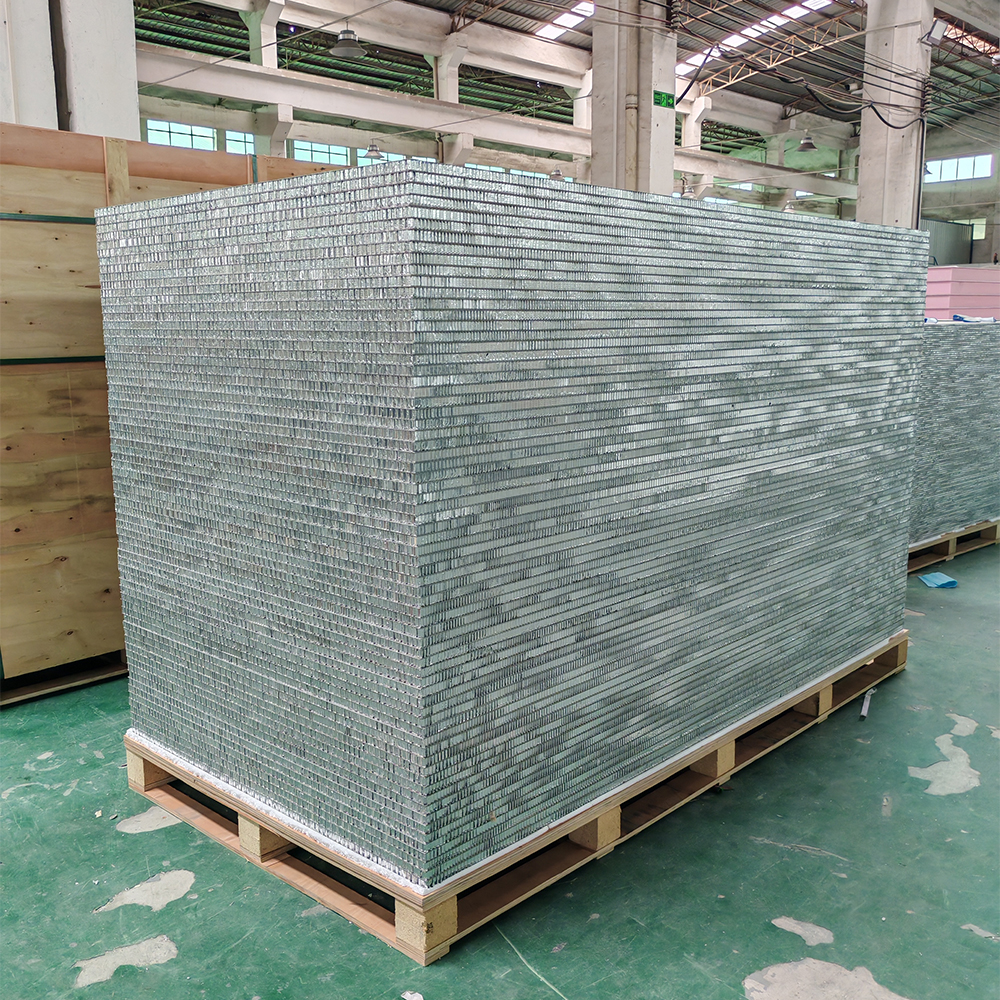
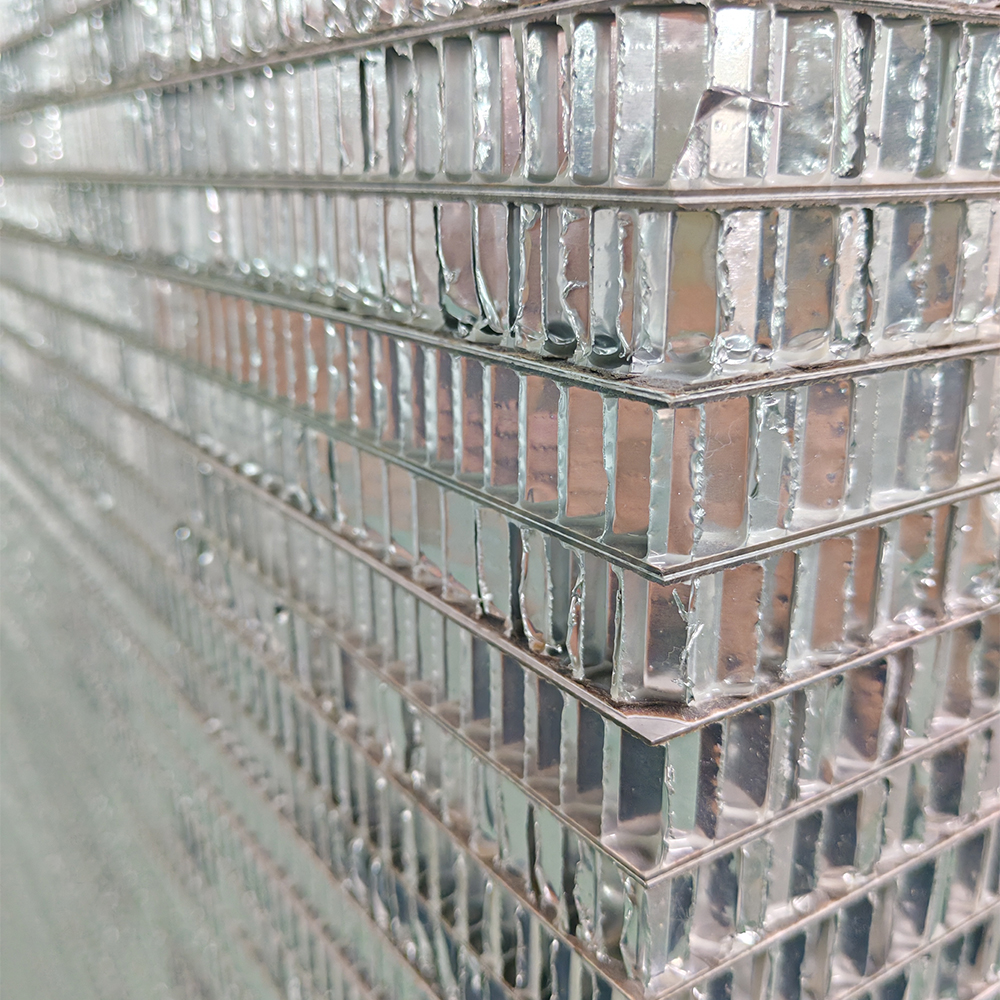
Choosing an aluminum honeycomb panel production line is a major investment decision for manufacturers entering or expanding the composite panel market.
The cheapest production line is not necessarily the most economical solution. A machine with high advertised capacity may not achieve the expected output under real production conditions. Similarly, a highly automated system may not be suitable if the factory does not have enough production volume to justify the investment.
For overseas buyers, the key is to evaluate the complete manufacturing system, including equipment configuration, production capacity, quality control, automation, maintenance, and supplier support.
1. Define Your Production Requirements First
Before contacting equipment manufacturers, define your target products.
Important questions include:
- What panel sizes will you produce?
- What thicknesses are required?
- What aluminum sheet specifications will be used?
- What honeycomb core will be used?
- What adhesive system will be used?
- What is the expected daily output?
- What level of automation is required?
- What industries will you serve?
For example, a manufacturer producing architectural wall panels may have very different requirements from a company producing transportation or marine interior panels.
2. Calculate Required Production Capacity
Capacity should be calculated from actual production requirements.
A simplified calculation is:
Required Capacity = Target Output ÷ Available Production Time
However, real capacity is affected by:
- Loading time
- Adhesive application
- Assembly
- Pressing
- Curing
- Cutting
- Material handling
- Cleaning
- Changeover
- Maintenance
- Unplanned downtime
Therefore, buyers should ask suppliers for practical production capacity, not only theoretical machine speed.
3. Evaluate the Main Equipment
A complete aluminum honeycomb panel production line may include:
- Sheet preparation equipment
- Adhesive application equipment
- Honeycomb core positioning system
- Assembly tables
- Laminating or pressing equipment
- Heating system
- Cutting equipment
- Conveyors
- Loading and unloading systems
- Control system
Not every factory requires all components to be fully automated.
The correct configuration depends on production volume and product requirements.
4. Examine Adhesive Application Technology
Adhesive application is one of the most important processes in honeycomb panel manufacturing.
Ask the supplier:
- Is adhesive application manual or automatic?
- How is glue quantity controlled?
- Can the coating width be adjusted?
- Can the machine handle different adhesive systems?
- How easy is cleaning?
- How easy is maintenance?
A stable adhesive application system can improve both product quality and material utilization.
5. Evaluate the Pressing System
The pressing system should provide stable and repeatable pressure.
Important characteristics include:
- Uniform pressure distribution
- Stable temperature
- Adjustable pressing time
- Suitable working dimensions
- Reliable hydraulic or mechanical components
- Easy parameter adjustment
The supplier should be able to explain how pressing parameters are controlled during production.
6. Check Automation Level
There are generally three approaches:
| Configuration | Characteristics | Suitable For |
|---|---|---|
| Manual | High operator involvement | Small production |
| Semi-Automatic | Key processes automated | Growing manufacturers |
| Automatic | Integrated material handling and control | Higher-volume production |
Automation should be selected according to production requirements rather than marketing claims.
7. Evaluate Machine Reliability
A reliable machine should operate consistently over extended production periods.
Ask about:
- Main electrical components
- Motors
- Hydraulic components
- Sensors
- Control system
- Heating system
- Conveyor components
- Spare parts
The supplier should also provide maintenance recommendations and replacement procedures.
8. Investigate Supplier Experience
Machine specifications alone do not tell the entire story.
Before purchasing, overseas buyers should evaluate the supplier’s manufacturing capability.
Useful questions include:
- Does the supplier manufacture the machine directly?
- How long have they produced this type of equipment?
- Are machines installed overseas?
- Can they provide factory testing?
- Can they provide installation support?
- Are technical manuals available?
- How are spare parts supplied?
A manufacturer with relevant project experience can often provide more practical process guidance.
9. Request Factory Acceptance Testing
Factory Acceptance Testing, commonly called FAT, can be valuable for major equipment purchases.
During testing, buyers can verify:
- Machine operation
- Panel dimensions
- Pressing process
- Adhesive application
- Automation functions
- Safety systems
- Production sequence
If possible, buyers should provide their actual product specifications before testing.
10. Compare Total Cost, Not Only Machine Price
The purchase price is only one part of the investment.
Total cost may include:
Equipment + Shipping + Installation + Commissioning + Utilities + Labor + Maintenance + Spare Parts + Training
A lower-priced machine may require more manual labor or maintenance.
A higher initial investment may provide automation that reduces labor requirements.
Therefore, buyers should compare the estimated total operating cost over several years.
11. After-Sales Service
After-sales support becomes particularly important when the machine is installed overseas.
A supplier should ideally provide:
- Installation guidance
- Commissioning support
- Operator training
- Technical documentation
- Remote troubleshooting
- Spare parts support
- Maintenance guidance
The buyer should clarify these items before signing the contract.
12. Build a Supplier Comparison Sheet
A practical supplier comparison can include:
| Evaluation Item | Supplier A | Supplier B | Supplier C |
|---|---|---|---|
| Production capacity | |||
| Panel size range | |||
| Thickness range | |||
| Automation level | |||
| Adhesive system | |||
| Pressing system | |||
| Cutting accuracy | |||
| Machine configuration | |||
| Installation | |||
| Training | |||
| Warranty | |||
| Spare parts | |||
| Total investment |
This allows buyers to compare suppliers using the same technical criteria.
Conclusion
Choosing a reliable aluminum honeycomb panel production line requires a system-level evaluation.
Production capacity, machine configuration, automation, adhesive application, pressing accuracy, maintenance, spare parts, installation, and supplier experience should all be considered.
For overseas buyers, the most useful approach is to define production requirements first and then ask each supplier to propose equipment based on those requirements.
This creates a more meaningful comparison than simply comparing machine prices.