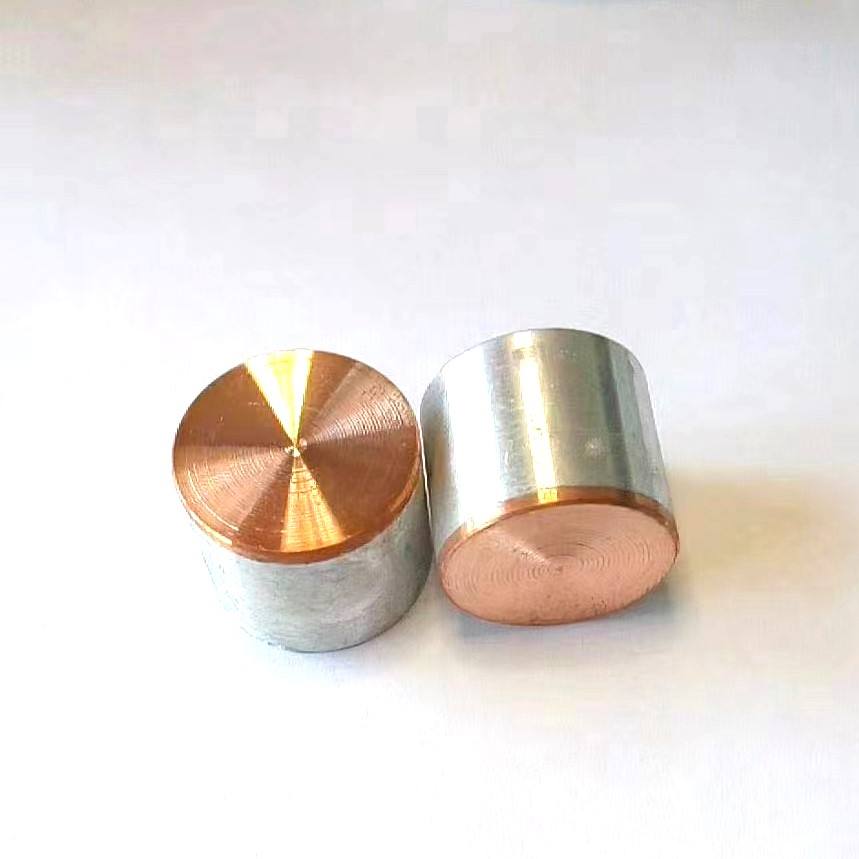
High-Strength Copper-Aluminium Bonding Through Explosive Welding In the pursuit of ultimate performance in industrial materials, sometimes the most powerful solutions are born from a literal force of nature. Our Explosive Cladding Bimetal Sheet represents the pinnacle of this principle, utilizing the precisely controlled power of explosive welding to create a metallurgical bond between copper and aluminium that…
High-Strength Copper-Aluminium Bonding Through Explosive Welding
In the pursuit of ultimate performance in industrial materials, sometimes the most powerful solutions are born from a literal force of nature. Our Explosive Cladding Bimetal Sheet represents the pinnacle of this principle, utilizing the precisely controlled power of explosive welding to create a metallurgical bond between copper and aluminium that is unattainable by any other method. This process results in a bimetal composite that delivers exceptional strength, conductivity, and reliability for the world’s most demanding applications.
The Power of Explosive Welding: A Revolutionary Bonding Technology
Explosive cladding, or explosive welding, is a solid-state welding process that uses controlled detonations to join metals. In this sophisticated operation, a “flyer” plate (typically copper) is accelerated at an extreme velocity by a carefully laid explosive charge across a precise stand-off distance onto a base “parent” plate (typically aluminium). The resulting high-velocity impact generates immense pressure at the collision point, which:
- Expels Surface Impurities: The impact jets away the surface oxides and contaminants from both metals, exposing perfectly clean, nascent metal surfaces.
- Creates a Wavy Interface: The collision forms a characteristic wavy or sinusoidal interface. This unique structure is not a defect; it is the hallmark of a successful explosive weld, providing mechanical interlocking and a vastly increased bond area, which dramatically enhances strength.
- Establishes a Metallurgical Bond: The clean metals, under extreme pressure, fuse at an atomic level without the formation of a brittle intermetallic compound layer, which is a common weakness in fusion-based welding of copper and aluminium.
Unmatched Advantages of Explosive Clad Copper-Aluminium Bimetal
The explosive cladding process imparts a set of properties that make this bimetal sheet superior to alternatives produced by rolling or sintering:
- Exceptionally High Bond Strength: The wavy interface creates a bond that is often stronger than the weaker of the two base metals. The shear strength of the interface typically exceeds that of the aluminium base, ensuring the bond will not fail under extreme mechanical or thermal stress.
- Minimal Brittle Intermetallic Compounds: Unlike other methods where heat application leads to the formation of hard and brittle intermetallic phases (like CuAl₂), the solid-state nature of explosive welding keeps these compounds to an absolute minimum. This results in a ductile, tough, and highly reliable interface.
- Superior Electrical and Thermal Conductivity: With a pristine, oxide-free bond, the transition of electrical current and heat between the copper and aluminium layers is seamless and highly efficient, with minimal interface resistance.
- Outstanding Durability and Fatigue Resistance: The composite can withstand severe thermal cycling, mechanical shock, and vibration without delamination, making it ideal for dynamic and high-stress environments.
Critical Applications Across Industries
This robust material is the solution of choice for applications where failure is not an option:
- Transition Joints in Electrical Industry: Used in switchgear, busbars, and transformer connections to provide a flawless, high-current transition between aluminium structures and copper terminals.
- Heavy-Duty Heat Exchangers: For cladding reactor vessels and in high-pressure, high-temperature heat exchangers in chemical processing and power generation.
- Marine and Offshore Engineering: Providing corrosion-resistant, high-strength bimetallic transitions for shipbuilding and offshore platform construction.
- Electrolysis and Metallurgy: Serving as durable anodes and structural components in harsh electrochemical environments.
Conclusion
The Explosive Cladding Bimetal Sheet is not just a material; it is a testament to harnessing immense power for precision engineering. It solves the fundamental challenge of creating a perfect union between two dissimilar but essential metals. By choosing this product, you invest in unparalleled interface integrity, long-term performance, and absolute reliability for your most critical industrial projects.


