A modern Aluminum Cabinet Production Line combines multiple processing stages to manufacture aluminum cabinets efficiently and consistently. Compared with using separate manual machines, an integrated production line can improve material flow, reduce repetitive handling, and support larger production volumes.
What Is an Aluminum Cabinet Production Line?
An Aluminum Cabinet Production Line is a coordinated system of machines used to manufacture aluminum cabinets.
Depending on factory requirements, the line may include automatic profile cutting, drilling, milling, panel cutting, grooving, assembly, and quality inspection equipment.
The production line can be configured for kitchen cabinets, bathroom cabinets, storage cabinets, wardrobes, office cabinets, and other aluminum furniture products.
Main Production Stages
1. Material Preparation
Aluminum profiles and panels are inspected and organized before entering production.
Digital production orders can be used to determine cutting dimensions and processing requirements.
2. Profile Cutting
Profiles are automatically or manually loaded into the cutting machine.
The machine cuts profiles according to the cabinet design.
3. CNC Drilling
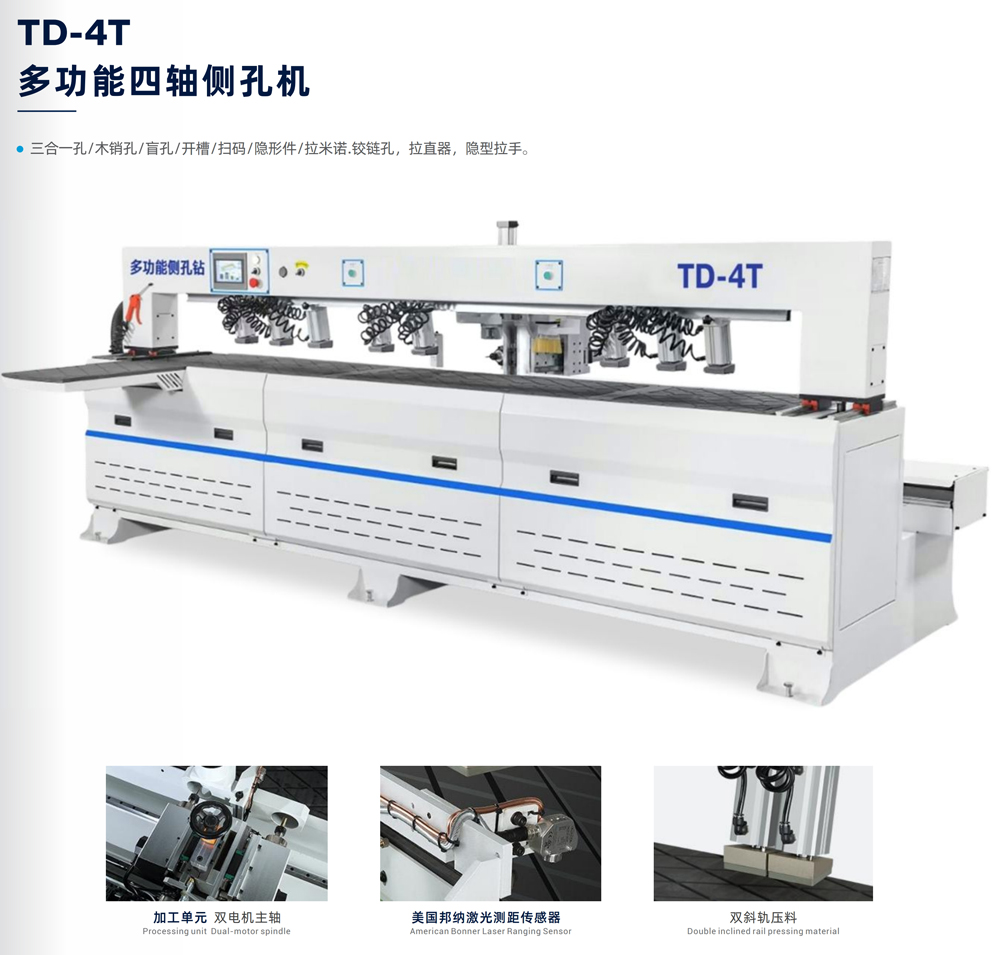
After cutting, profiles are transferred to a CNC drilling system.
Hole positions can be programmed according to hinges, connectors, screws, handles, and other hardware.
4. Milling and Slotting
Some cabinet components require grooves or end processing.
CNC milling equipment can perform these operations with programmable accuracy.
5. Panel Processing
Cabinet panels can be cut, drilled, grooved, bent, or edge processed according to the product design.
6. Component Sorting
Processed components are sorted according to cabinet orders.
Barcode systems can help match components with the corresponding production order.
7. Assembly
Profiles and panels are assembled using connectors, screws, rivets, hinges, brackets, and other hardware.
8. Inspection
Finished cabinets are checked for dimensions, appearance, hardware alignment, structural integrity, and surface quality.
Benefits of an Aluminum Cabinet Production Line
An integrated production line can improve production organization.
Material moves through defined processing stages instead of being transported manually between unrelated machines.
Automation can also improve repeatability.
For customized cabinets, CNC control allows different orders to be processed using different programs.
Production lines can also be expanded over time. A factory may begin with cutting and CNC machining and later add automated handling and assembly.
Customization Capability
Modern cabinet manufacturers often need to produce different sizes in the same factory.
An Aluminum Cabinet Production Line can be configured for flexible manufacturing.
For example, the same system may produce a 600 mm cabinet, 800 mm cabinet, and 1,200 mm cabinet by changing digital production parameters.
This makes CNC technology particularly suitable for project-based and made-to-order furniture.
How to Select a Production Line
Before purchasing, buyers should define:
- Annual production volume
- Daily cabinet output
- Profile dimensions
- Panel dimensions
- Panel thickness
- Required machining accuracy
- Number of cabinet models
- Automation level
- Available factory space
- Software requirements
The supplier should also provide information about machine installation, operator training, maintenance, and spare parts.
Conclusion
An Aluminum Cabinet Production Line integrates cutting, drilling, milling, panel processing, assembly, and inspection into a coordinated manufacturing workflow.
For manufacturers seeking higher productivity and better process control, an integrated production line can provide a scalable foundation for aluminum kitchen cabinets, bathroom cabinets, wardrobes, and commercial storage systems.