Vietnam has become an increasingly important manufacturing and construction market in Southeast Asia. With growing demand for lightweight building materials, transportation components, interior panels, and industrial composites, aluminum honeycomb panels are attracting more attention from local manufacturers and project contractors.
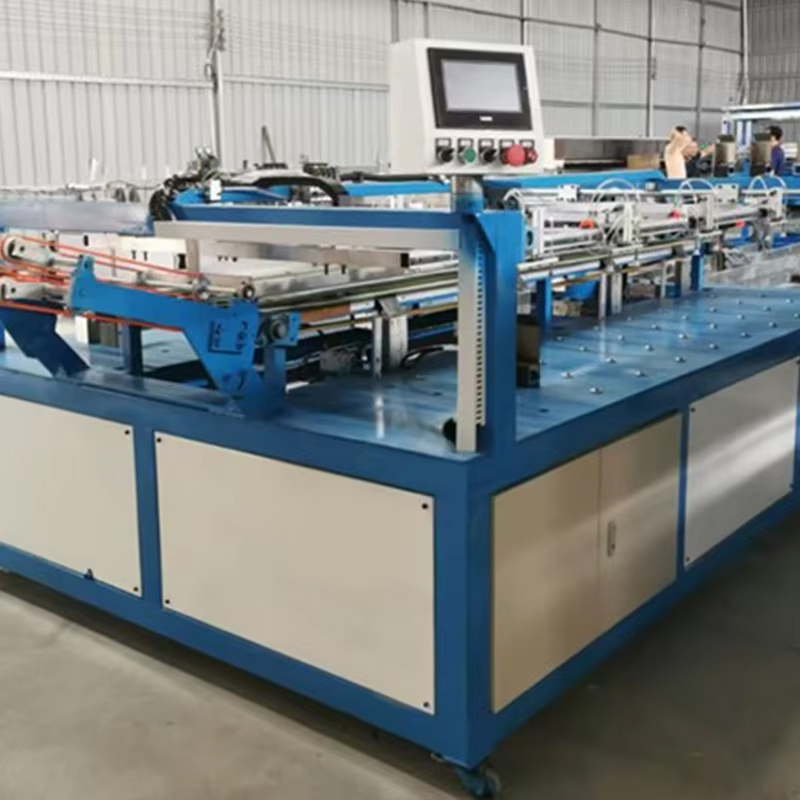
For companies planning to manufacture aluminum honeycomb panels in Vietnam, choosing the right aluminum honeycomb panel machine is one of the most important decisions. The machine determines production efficiency, panel quality, material utilization, and the long-term operating cost of the factory.
This guide explains the main production technology, equipment configuration, applications, and key factors Vietnamese buyers should consider before purchasing an aluminum honeycomb panel production line.
What Is an Aluminum Honeycomb Panel?
An aluminum honeycomb panel is a lightweight sandwich structure consisting of aluminum skins bonded to an aluminum honeycomb core.
The honeycomb structure provides high stiffness with relatively low weight. Depending on the application, manufacturers can customize the aluminum skin thickness, honeycomb core thickness, cell size, surface finish, and overall panel dimensions.
Compared with conventional solid aluminum plates, honeycomb panels can provide a better strength-to-weight ratio while reducing the total material weight of large panels.
Typical applications include:
- Building exterior and interior walls
- Curtain wall systems
- Aluminum ceilings
- Transportation interiors
- Railway and automotive components
- Marine and ship interiors
- Airport and public building decoration
- Furniture and cabinet panels
- Industrial equipment enclosures
Because of these applications, demand for aluminum honeycomb panels is growing in many Southeast Asian markets, including Vietnam.
Why Invest in an Aluminum Honeycomb Panel Machine in Vietnam?
For Vietnamese manufacturers, producing aluminum honeycomb panels locally can provide several advantages.
First, local production can reduce dependence on imported finished panels. Instead of purchasing finished products from overseas suppliers, manufacturers can purchase aluminum sheets, honeycomb cores, adhesives, and other raw materials and convert them into finished panels locally.
Second, a production line allows manufacturers to offer customized dimensions and specifications. This is particularly useful for construction projects, transportation interiors, furniture, and architectural applications where standard panel sizes may not be sufficient.
Third, automated equipment can improve production consistency. Manual manufacturing may result in differences in adhesive application, panel thickness, bonding strength, and surface flatness. A properly configured production line can significantly improve process control.
For companies serving Vietnam’s growing construction and industrial sectors, this can create opportunities to develop both standard products and customized aluminum honeycomb panels.
Main Equipment in an Aluminum Honeycomb Panel Production Line
A complete aluminum honeycomb panel production line can contain several types of machinery. The exact configuration depends on production capacity, panel specifications, automation level, and the manufacturer’s manufacturing process.
1. Aluminum Sheet Cutting Machine
The production process usually begins with aluminum sheet preparation.
A cutting machine is used to cut aluminum sheets according to the required panel dimensions. Automatic cutting equipment can improve dimensional accuracy and reduce material waste.
For high-volume production, an automated cutting system can also be connected with other production equipment to create a more efficient workflow.
2. Aluminum Honeycomb Core Preparation Equipment
The aluminum honeycomb core is the structural component of the panel.
Depending on the manufacturing method, the core may be purchased as a finished honeycomb material or produced in-house.
Core specifications can vary according to application. Common variables include:
- Honeycomb cell size
- Core thickness
- Aluminum foil thickness
- Core density
- Aluminum alloy
- Surface treatment
Choosing the correct core specification is important because it directly affects panel weight, stiffness, and mechanical performance.
3. Glue Application Machine
Adhesive application is one of the most important stages in honeycomb panel manufacturing.
The adhesive must be distributed evenly across the bonding surface. Uneven glue application can lead to weak bonding, delamination, surface deformation, or inconsistent product quality.
An automatic glue coating or glue spraying machine can provide more uniform adhesive application than manual processes.
For industrial production in Vietnam, manufacturers should consider equipment with adjustable glue quantity, stable coating speed, and easy cleaning and maintenance.
4. Panel Assembly System
After the aluminum skins and honeycomb core are prepared, the materials are assembled into a sandwich structure.
An efficient assembly system should maintain accurate positioning between the top aluminum sheet, honeycomb core, and bottom aluminum sheet.
For customized panels, positioning accuracy becomes particularly important because the finished panel may have special dimensions or shapes.
5. Hot Press or Cold Press Machine
Pressing equipment is used to create sufficient pressure between the aluminum skins, adhesive, and honeycomb core.
Depending on the adhesive system and production technology, manufacturers may use cold pressing, hot pressing, vacuum pressing, or other bonding methods.
The appropriate process depends on adhesive characteristics, production speed, panel structure, and required bonding performance.
A reliable pressing system should provide stable pressure and uniform loading across the panel surface.
6. Panel Trimming and Finishing Equipment
After bonding, the panels may require trimming, edge processing, drilling, routing, or CNC machining.
For architectural and transportation applications, accurate edge dimensions are important for installation.
Manufacturers can also integrate CNC cutting equipment for customized shapes, openings, curved components, and complex panel designs.
Aluminum Honeycomb Panel Manufacturing Process
A typical production process can be summarized as:
Aluminum Sheet Preparation → Cutting → Surface Treatment → Adhesive Application → Honeycomb Core Positioning → Panel Assembly → Pressing → Curing → Trimming → Inspection → Packaging
Each stage affects the final panel quality.
For example, poor surface preparation can reduce bonding strength, while excessive adhesive can increase panel weight and production cost. Insufficient adhesive can create bonding defects.
Therefore, selecting the machine is only one part of building a successful manufacturing operation. Process control and operator training are equally important.
How to Choose an Aluminum Honeycomb Panel Machine in Vietnam
Vietnamese buyers should evaluate several factors before purchasing equipment.
Production Capacity
Determine the expected monthly or annual output first.
A small factory supplying customized architectural projects may not require the same equipment configuration as a large manufacturer producing thousands of square meters of panels every month.
Choosing equipment based only on maximum machine speed can result in unnecessary investment.
Panel Size
Panel dimensions should be discussed with the equipment manufacturer before ordering.
Common production requirements may include large-format architectural panels, standard decorative panels, ceiling panels, or customized transportation panels.
The machine working width and pressing dimensions must match the intended products.
Automation Level
Manufacturers can choose between semi-automatic and fully automatic production lines.
Semi-automatic equipment generally requires more labor but may have a lower initial investment.
Fully automatic systems can reduce manual operations and improve production consistency, making them more attractive for larger factories.
Adhesive Technology
The adhesive system is another critical consideration.
Different applications may require different adhesive technologies depending on temperature resistance, bonding strength, curing time, environmental conditions, and required service life.
Therefore, the machine supplier should understand the buyer’s target market and final application before recommending the adhesive application system.
After-Sales Service
For Vietnamese manufacturers purchasing machinery from overseas, after-sales support is extremely important.
Before placing an order, buyers should ask about:
- Installation guidance
- Operator training
- Spare parts availability
- Remote technical support
- Machine warranty
- Maintenance requirements
- Production line commissioning
A lower machine price does not necessarily mean a lower total investment cost. Reliable technical support can significantly reduce downtime during production.
Applications of Aluminum Honeycomb Panels in Vietnam
Vietnam’s construction industry provides significant opportunities for aluminum honeycomb panels.
Architectural panels can be used for building facades, interior walls, ceilings, columns, partitions, and decorative structures.
The transportation sector is another potential application. Lightweight composite panels can be used in vehicle interiors, railway interiors, buses, and specialized transportation equipment.
Marine applications can also benefit from lightweight sandwich structures. Aluminum honeycomb panels can be used for interior walls, ceilings, partitions, doors, and other non-primary structural components.
Furniture manufacturers can also use honeycomb panels to produce lightweight doors, cabinets, partitions, and large-format furniture components.
Final Considerations for Vietnamese Buyers
Choosing an aluminum honeycomb panel machine in Vietnam should not be based on machine price alone.
A successful investment requires matching the production line with the target panel specifications, production capacity, raw materials, adhesive system, automation requirements, and final applications.
Before purchasing equipment, it is recommended to prepare detailed production requirements, including panel dimensions, aluminum skin thickness, honeycomb core specifications, expected production capacity, target applications, and desired automation level.
A professional machinery manufacturer can then design a suitable production configuration rather than simply supplying a standard machine.
For Vietnamese manufacturers planning to enter the aluminum honeycomb panel market, the right production equipment can provide a foundation for consistent quality, flexible customization, and scalable production. As demand for lightweight and high-performance composite panels continues to expand across Vietnam and Southeast Asia, investing in appropriate manufacturing technology can become an important competitive advantage.