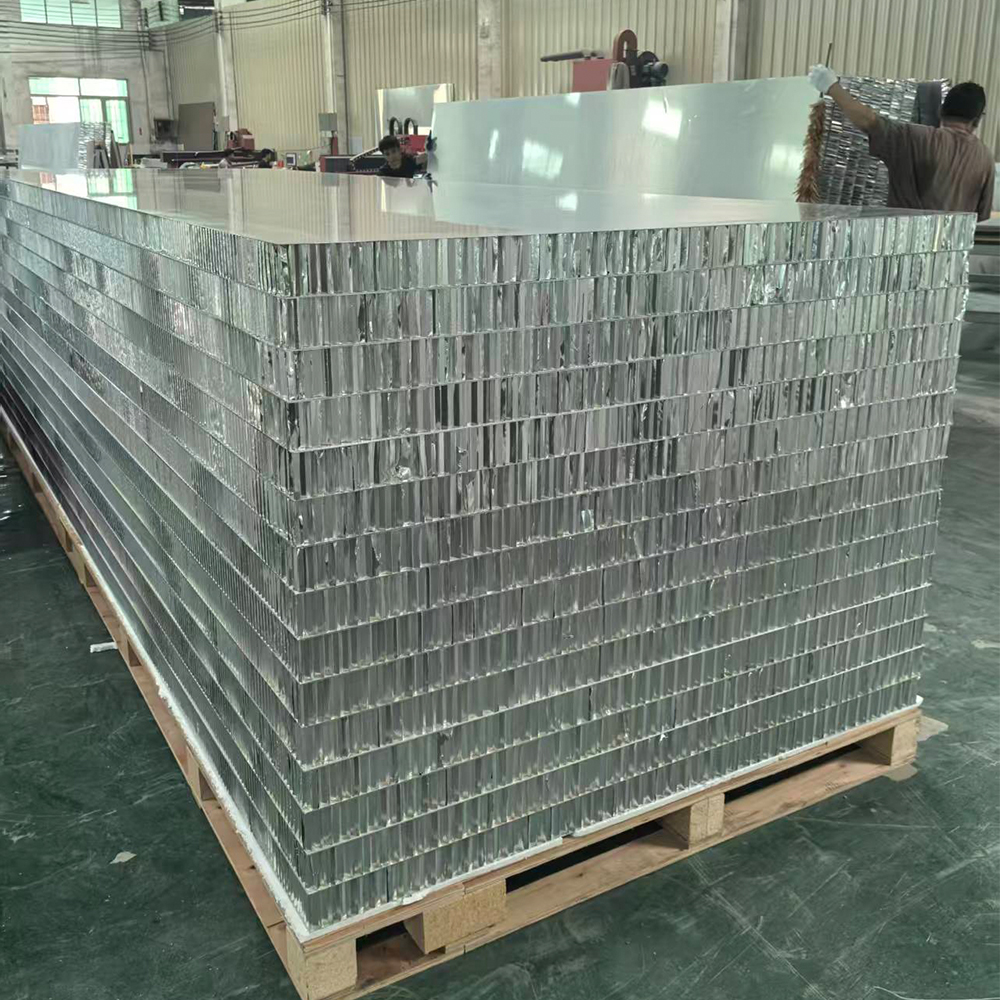
Buying an aluminum honeycomb panel machine is only the first step toward establishing production.
For overseas manufacturers, installation and commissioning are equally important because equipment performance depends on correct assembly, electrical connections, calibration, process parameters, and operator training.
A properly installed aluminum honeycomb panel production machine should be tested systematically before entering continuous production.
1. Prepare the Factory Before Delivery
Before the machine arrives, the buyer should confirm the required factory conditions.
These may include:
- Floor area
- Floor load capacity
- Electrical supply
- Compressed air
- Ventilation
- Lighting
- Material storage
- Finished product storage
- Machine access
- Safety clearance
The exact requirements depend on the production line configuration.
2. Confirm Machine Layout
The equipment layout should provide sufficient space for material movement.
A typical workflow may be:
Raw Material → Preparation → Adhesive Application → Assembly → Pressing → Cutting → Inspection → Packaging
If equipment is installed too close together, material handling can become difficult.
Therefore, factory layout should be considered before shipment.
3. Mechanical Installation
The machine should be installed according to the supplier’s technical documentation.
Important points include:
- Leveling
- Alignment
- Fastening
- Conveyor alignment
- Press alignment
- Mechanical clearance
Incorrect leveling can affect long-term machine performance.
4. Electrical Installation
Electrical connections should be completed according to the supplied electrical drawings.
Important systems may include:
- Main power supply
- Control cabinet
- PLC
- Motors
- Sensors
- Heating system
- Emergency-stop system
- Safety switches
Electrical installation should be performed by qualified personnel.
5. Pneumatic and Hydraulic Systems
If the machine uses compressed air or hydraulic systems, these should be checked before commissioning.
The commissioning team should inspect:
- Pressure
- Leakage
- Connections
- Valves
- Cylinders
- Pumps
- Filters
- Hoses
Stable utility supply is essential for reliable machine operation.
6. Empty Machine Testing
Before loading materials, the machine should be operated without production materials.
This allows technicians to check:
- Motor rotation
- Conveyor movement
- Sensor signals
- Control buttons
- Emergency stops
- Automatic sequences
- Hydraulic operation
- Heating controls
Problems found during empty testing can usually be corrected more easily than problems discovered during full production.
7. Trial Production
After basic testing, trial panels can be produced.
The trial should verify:
- Panel dimensions
- Panel thickness
- Adhesive application
- Core positioning
- Pressing performance
- Flatness
- Surface appearance
- Cutting accuracy
If the machine is customized, the buyer should ideally use the actual production materials during testing.
8. Parameter Adjustment
Different panel structures may require different process settings.
Potential parameters include:
- Adhesive quantity
- Pressing pressure
- Temperature
- Pressing time
- Conveyor speed
- Cutting position
These settings should be recorded once stable production conditions are achieved.
9. Operator Training
Training should cover more than basic machine operation.
Operators should understand:
- Startup procedure
- Shutdown procedure
- Parameter adjustment
- Alarm handling
- Cleaning
- Daily maintenance
- Safety procedures
- Basic troubleshooting
This reduces the risk of operational errors.
10. Production Acceptance
Before full-scale production, the buyer and supplier can agree on acceptance criteria.
Possible criteria include:
| Item | Acceptance Focus |
|---|---|
| Machine operation | Stable automatic/manual functions |
| Panel size | Required dimensions |
| Thickness | Target thickness |
| Bonding | Consistent lamination |
| Flatness | Within agreed requirement |
| Cutting | Required dimensional accuracy |
| Safety | Emergency and protection systems |
| Capacity | Agreed production conditions |
The exact acceptance criteria should be agreed before the equipment contract is finalized.
Installation Challenges for Overseas Buyers
International projects can involve additional challenges.
These may include:
- Different electrical standards
- Factory infrastructure differences
- Language barriers
- Shipping damage
- Installation coordination
- Local technician availability
Therefore, buyers should clarify installation and commissioning responsibilities before shipment.
What Should the Supplier Provide?
A professional equipment supplier should provide appropriate technical documentation, which may include:
- Installation drawings
- Electrical diagrams
- Operation manuals
- Maintenance instructions
- Spare-parts lists
- Troubleshooting information
- Parameter recommendations
Remote technical support can also be valuable after commissioning.
Conclusion
Successful installation and commissioning are essential for achieving the expected performance of an aluminum honeycomb panel production line.
The process should cover factory preparation, mechanical installation, electrical connection, utility inspection, empty-machine testing, trial production, parameter adjustment, and operator training.
For overseas buyers, installation support should be treated as part of the equipment purchasing decision rather than an afterthought.