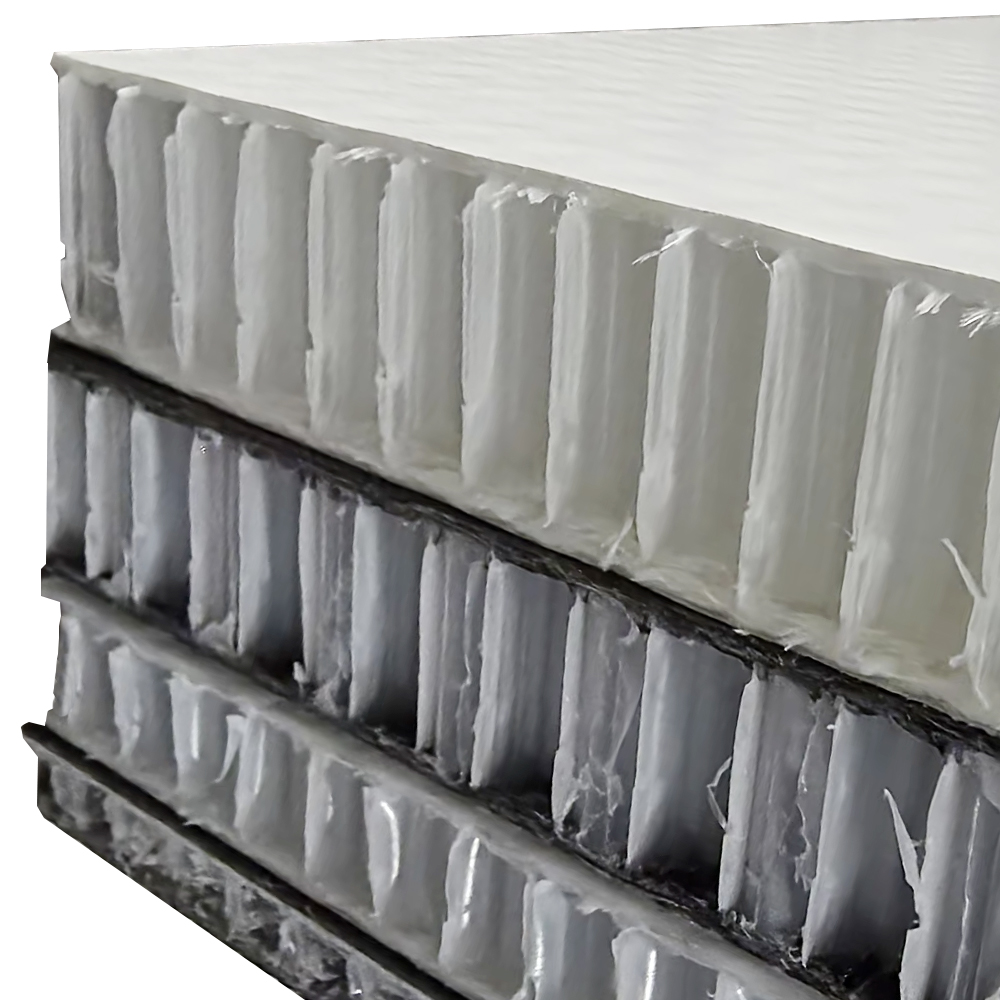
When purchasing an Aluminum Honeycomb Panel Production Line, manufacturers often need to choose between a semi-automatic system and a fully automatic production line.
The right choice depends on production volume, labor costs, product variety, factory size, investment budget, and long-term expansion plans.
There is no universal answer. A semi-automatic line can be the right solution for one factory, while a fully automatic system may be more suitable for another.
What Is a Semi Automatic Production Line?
A semi-automatic aluminum honeycomb panel production system combines mechanical equipment with manual operations.
For example, workers may manually load aluminum sheets and honeycomb cores, while machines handle adhesive application, pressing, or cutting.
A typical workflow may look like:
Manual Loading → Machine Gluing → Manual Assembly → Mechanical Pressing → Manual Transfer → Cutting
This configuration provides a balance between equipment investment and production efficiency.
What Is a Fully Automatic Production Line?
A fully automatic system integrates multiple production processes and minimizes manual material handling.
Depending on the configuration, it may include:
- Automatic loading
- Automatic adhesive application
- Automatic positioning
- Automatic assembly
- Automatic pressing
- Automatic conveying
- Automatic cutting
- Automatic unloading
The goal is to create a continuous and coordinated production process.
Capacity Comparison
The main advantage of automation becomes more obvious as production volume increases.
| Factor | Semi Automatic Line | Fully Automatic Line |
|---|---|---|
| Manual Labor | Higher | Lower |
| Initial Investment | Lower | Higher |
| Production Capacity | Medium | High |
| Product Consistency | Good | Higher |
| Material Handling | More manual | More automated |
| Labor Dependency | Higher | Lower |
| Large-Volume Orders | Less suitable | Highly suitable |
| Expansion Potential | Moderate | High |
Actual capacity depends on the machine configuration and product specifications, so these categories should not be treated as fixed production numbers.
Labor Requirements
One major reason manufacturers consider automation is labor reduction.
In a semi-automatic system, operators may be required at several production stations.
A fully automatic line can reduce repetitive manual tasks and allow fewer workers to supervise a larger production system.
However, automation does not mean that no workers are required.
Factories still need personnel for:
- Equipment supervision
- Quality inspection
- Material preparation
- Maintenance
- Production management
The difference is that workers spend less time on repetitive handling.
Production Consistency
Consistency is another important advantage of automation.
Manual processes may vary between operators. For example, adhesive application, panel positioning, and material handling can be affected by operator experience.
Automated systems can control parameters more consistently.
This can help manufacturers achieve more stable:
- Adhesive application
- Panel positioning
- Pressing conditions
- Production cycles
- Product dimensions
For customers supplying large construction or transportation projects, consistency can be particularly important.
Flexibility
Semi-automatic equipment can have an advantage when products change frequently.
A factory producing highly customized panels may prefer equipment that allows operators to make quick manual adjustments.
Fully automatic systems are often most efficient when the production process is relatively standardized.
Therefore:
High volume + standardized products → Automation
Low volume + customized products → Semi-automatic flexibility
This is not an absolute rule, but it is a useful starting point.
Initial Investment
A semi-automatic production system generally requires less initial investment because it uses more manual labor and fewer automation modules.
A fully automatic production line normally requires a larger investment in:
- Automation systems
- Conveyors
- Sensors
- Control systems
- Automatic loading
- Automatic unloading
- Integration engineering
However, the purchase price should not be the only factor.
The total cost of ownership should include:
Equipment + Labor + Maintenance + Energy + Material Waste + Downtime + Production Output
A more expensive automated system can potentially provide better long-term economics when production volume is high.
When Should You Choose Semi Automatic Equipment?
Semi-automatic equipment can be suitable for:
- New manufacturers
- Small and medium factories
- Small-batch production
- Custom panel production
- Multiple product specifications
- Limited initial investment
- Markets with relatively low labor costs
It can also be useful as an entry-level production solution.
When Should You Choose a Fully Automatic Line?
A fully automatic Aluminum Honeycomb Panel Production Line is more appropriate when a factory has:
- High daily production requirements
- Stable order volumes
- Repetitive products
- High labor costs
- Large-format panel production
- Expansion plans
- Strict consistency requirements
Automation becomes particularly valuable when production volume is large enough to justify the additional investment.
A Simple Decision Example
Suppose Factory A needs 150 m²/day and mainly produces customized panels.
A semi-automatic system may provide sufficient capacity and greater flexibility.
Factory B needs 1,000 m²/day and receives standardized orders from several large construction projects.
A fully automatic system may be more appropriate because manual handling could become the production bottleneck.
Can a Production Line Be Upgraded Later?
In many cases, production equipment can be designed in modules.
A factory may initially install:
Semi Automatic Production Equipment
and later add:
- Automatic loading
- Automatic conveying
- Automatic gluing
- Automatic cutting
- Automatic unloading
This approach can allow the factory to expand production gradually.
However, upgrade compatibility should be discussed before purchasing the original equipment.
Final Recommendation
The decision between an automatic and semi-automatic Aluminum Honeycomb Panel Production Line should be based on production requirements rather than simply equipment price.
Consider:
Daily Output + Labor Cost + Product Variety + Quality Requirements + Factory Layout + Future Growth
For small-scale and customized production, semi-automatic equipment can be a practical choice.
For high-volume standardized production, automation can provide significant advantages in productivity, consistency, labor efficiency, and long-term scalability.