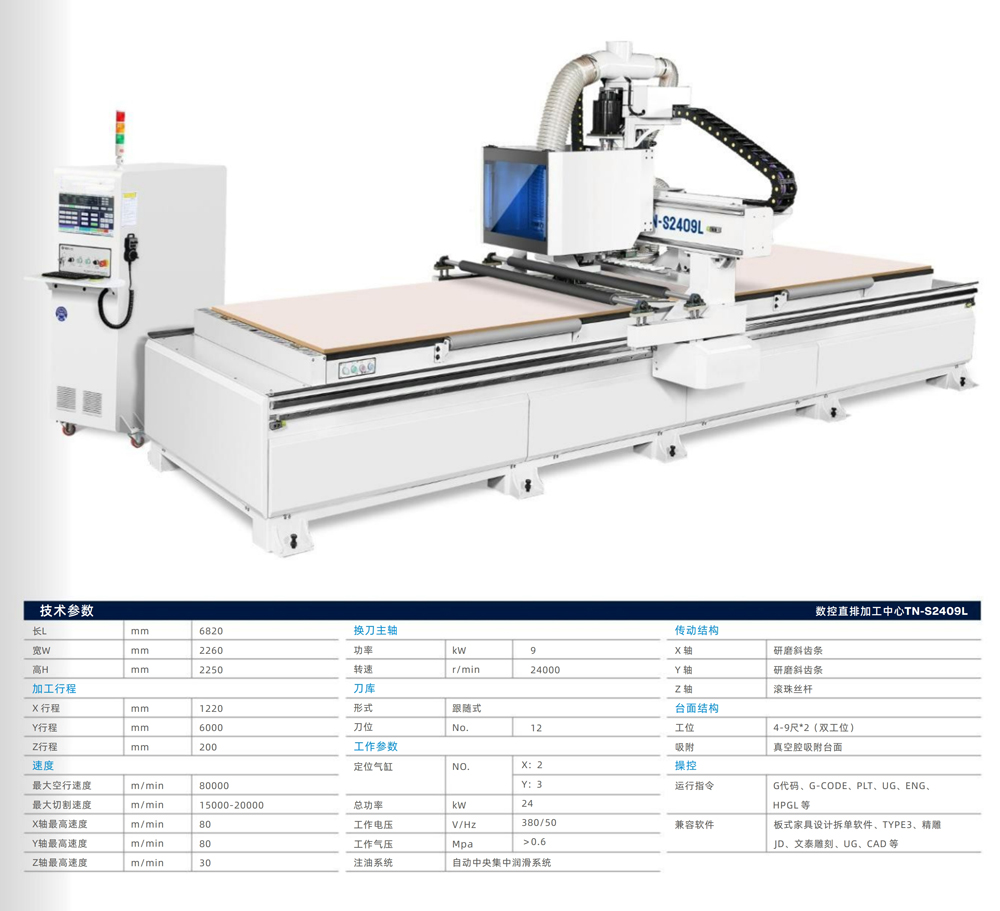
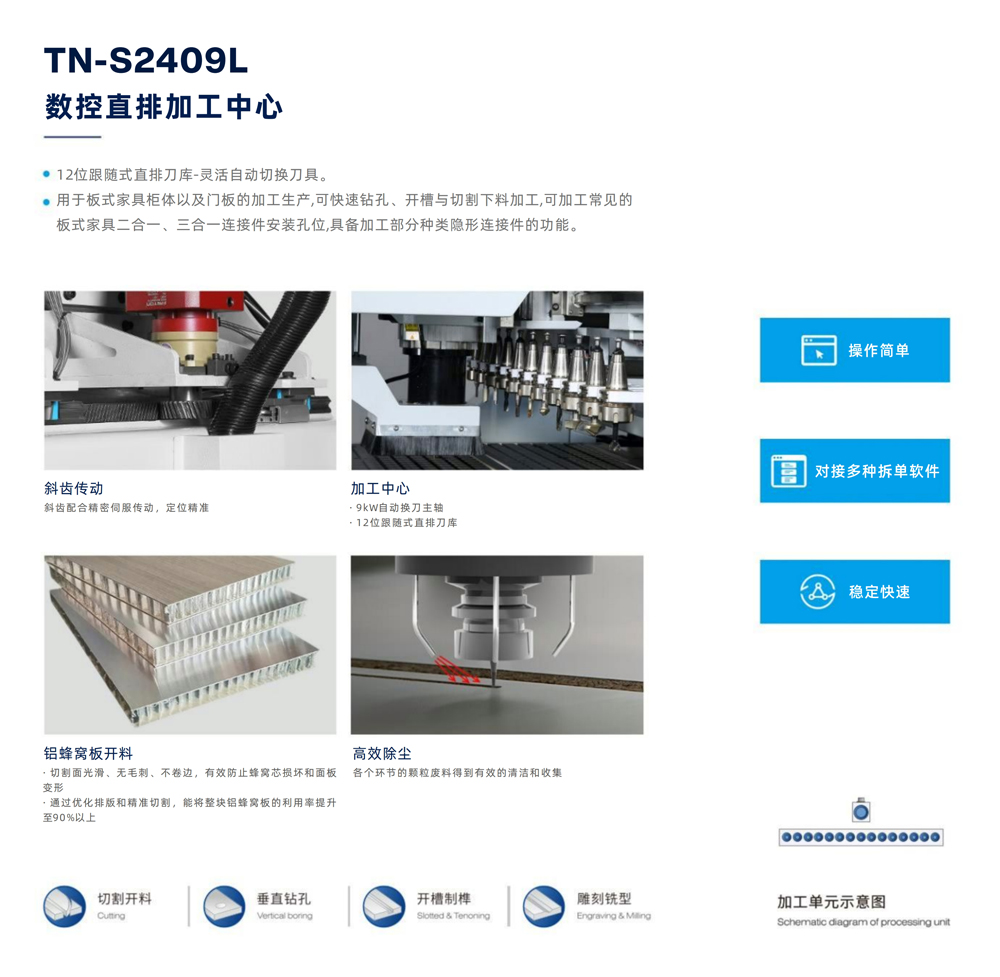
The demand for customized aluminum furniture is increasing as manufacturers look for lightweight, durable, moisture-resistant, and low-maintenance alternatives to traditional furniture materials. Kitchen cabinets, wardrobes, bathroom cabinets, storage systems, office furniture, and aluminum doors can all be manufactured using aluminum profiles and panels.
A CNC Aluminum Furniture Production Line combines computer numerical control machining with automated material processing to create a flexible manufacturing system. Instead of relying on manual measuring, drilling, and cutting, CNC technology allows furniture components to be manufactured according to digital production data.
For manufacturers planning a new aluminum furniture factory, understanding the equipment configuration and technical parameters is essential before purchasing a production line.
What Is a CNC Aluminum Furniture Production Line?
A CNC Aluminum Furniture Production Line is an integrated manufacturing system designed to process aluminum profiles, aluminum panels, and related furniture components.
The line normally combines several processes:
Material Feeding → Profile Cutting → CNC Drilling → CNC Milling → Panel Processing → Component Sorting → Assembly → Inspection
Depending on production requirements, automatic loading, barcode identification, conveyors, robotic handling, and production management software can also be incorporated.
Unlike a traditional production line designed for one fixed product, CNC equipment can support multiple furniture models. This is particularly useful for customized aluminum cabinets and wardrobes.
Main Equipment Configuration
A complete CNC aluminum furniture production line can contain several types of machinery.
1. Automatic Aluminum Profile Cutting Machine
The cutting machine determines the initial dimensions of the furniture components.
It can process aluminum profiles into accurate lengths according to digital cutting lists. Automatic feeding and positioning systems can reduce manual measurement and improve production consistency.
2. CNC Aluminum Profile Machining Center
The CNC machining center performs drilling, milling, slotting, tapping, and other operations.
Multiple operations can be completed on one component without manually repositioning the workpiece.
3. Aluminum Panel Processing Machine
Furniture panels may require cutting, drilling, grooving, trimming, or bending.
The panel-processing section should be selected according to the panel material and thickness.
4. Automatic Transfer System
Conveyors or robotic handling systems can move components between machines.
This reduces unnecessary manual transportation and can improve production flow.
5. Automatic Sorting System
When several furniture orders are processed simultaneously, component identification becomes important.
Barcode or QR-code systems can associate each component with a specific cabinet, wardrobe, or production order.
Typical Technical Parameters
The exact parameters vary according to machine design and configuration. The following table can be used as a reference framework when evaluating suppliers.
| Parameter | Typical Configuration |
|---|---|
| Processed Material | Aluminum Profile, Aluminum Sheet, Composite Panel |
| Profile Processing Length | 300–6000 mm |
| Profile Width | Up to approximately 200–300 mm |
| Profile Height | Up to approximately 100–200 mm |
| CNC Axes | 3–5 Axis |
| Spindle Power | Approximately 3–9 kW |
| Spindle Speed | 6000–24000 rpm |
| Positioning Accuracy | Approximately ±0.05–0.10 mm |
| Repeatability | Approximately ±0.02–0.05 mm |
| Automatic Tool Changer | Optional / Available |
| Control System | CNC Controller |
| Automatic Feeding | Optional |
| Barcode Identification | Optional |
| Production Mode | Manual, Semi-Automatic, Fully Automatic |
Actual specifications should always be confirmed according to the selected machine model.
Why CNC Technology Is Important
Traditional aluminum furniture production often requires manual measurement and drilling.
For example, a cabinet door may require several hinge holes. If every hole is marked manually, production accuracy depends heavily on operator experience.
With CNC machining, the hole positions can be programmed digitally.
The same principle applies to wardrobe frames, cabinet structures, door frames, and customized furniture components.
CNC technology also makes small-batch production easier.
A factory may produce several cabinet sizes during the same shift. Instead of preparing a dedicated machine for every product, operators can change the processing program.
Production Capacity
Production capacity depends on the furniture design, number of machining operations, loading method, operator efficiency, and machine configuration.
For this reason, manufacturers should avoid evaluating production capacity based only on the maximum machine speed.
A more meaningful evaluation should consider:
- Number of components per cabinet
- Average machining time per component
- Number of CNC operations
- Loading and unloading time
- Material transfer time
- Assembly time
- Daily operating hours
For example, a cabinet requiring many drilling and milling operations will have a different production cycle from a simple aluminum frame.
Automation Level
CNC aluminum furniture production lines can be divided into several automation levels.
Semi-Automatic Production
Operators load profiles, operate CNC machines, and manually transfer components.
This configuration is suitable for flexible production and moderate output.
Automatic Machining Line
Automatic feeding and material transfer are added to CNC cutting and machining.
This reduces repetitive manual handling.
Fully Integrated Production Line
Cutting, CNC machining, sorting, panel processing, assembly, and production data management can be integrated.
This configuration is more suitable for large-scale factories with standardized workflows.
Applications
A CNC Aluminum Furniture Production Line can manufacture:
- Aluminum kitchen cabinets
- Aluminum wardrobes
- Bathroom cabinets
- Office cabinets
- Storage cabinets
- Aluminum cabinet doors
- Aluminum furniture frames
- Commercial display furniture
- Hotel furniture
- Customized furniture
The same production line can often be configured for several product categories.
How Buyers Should Select a CNC Production Line
Before contacting an equipment manufacturer, buyers should prepare detailed production information.
The supplier should know the aluminum profile dimensions, furniture types, average cabinet sizes, expected output, panel materials, machining operations, and desired automation level.
A technical proposal can then be developed around actual requirements.
Buyers should also request machine drawings, layout plans, electrical specifications, CNC system information, tooling lists, installation requirements, and maintenance documentation.
Conclusion
A CNC Aluminum Furniture Production Line provides a flexible manufacturing platform for modern aluminum furniture factories. By combining profile cutting, CNC drilling, milling, panel processing, material handling, and digital production management, manufacturers can support both standardized and customized furniture production.
The most important factor is not simply machine speed. The complete production system should be designed around the furniture structure, production volume, material dimensions, required accuracy, and future automation plans.