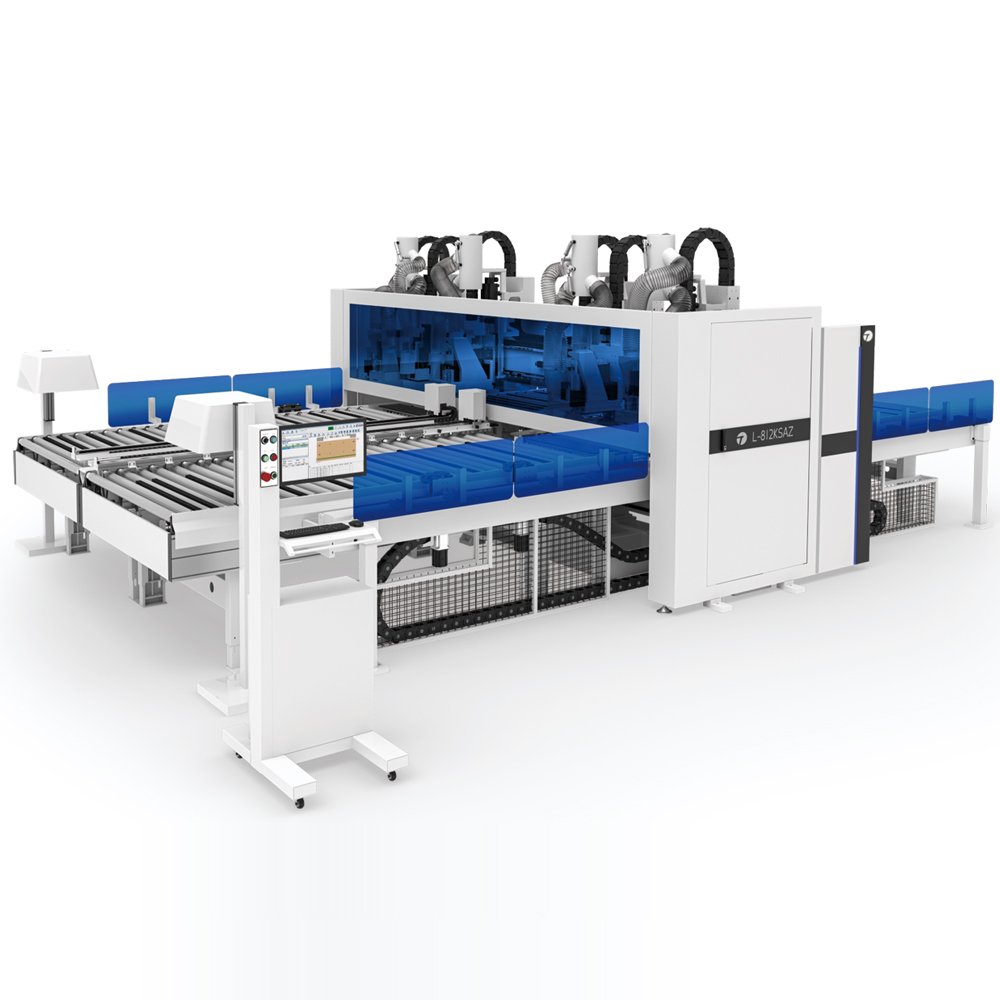
1. Introduction
Edge banding machines are essential pieces of equipment in modern panel manufacturing. They are widely used in furniture production, cabinet manufacturing, aluminum furniture processing, architectural decoration, and composite sandwich panel fabrication. By applying edge materials to exposed panel edges, these machines improve product appearance, protect internal structures, and enhance overall durability.
However, not all edge banding machines are designed for the same production requirements. Different machine types vary significantly in automation level, processing precision, production capacity, machine configuration, and material compatibility.
The four major categories are manual edge banding machines, semi-automatic edge banding machines, automatic edge banding machines, and CNC edge banding machines. Understanding their differences is essential for manufacturers seeking to optimize production efficiency and select the right equipment.
2. Manual Edge Banding Machine
A Manual Edge Banding Machine is a basic edge processing device that requires substantial operator involvement. Depending on the design, it may use manual feeding, handheld application tools, or simple mechanical pressing systems.
Working Principle
The operator positions the panel and applies adhesive or activates the bonding system. The edge banding material is then manually aligned and pressed against the panel edge. Additional trimming and finishing may be performed using separate tools.
Main Features
- Simple mechanical structure
- Low initial investment
- Flexible operation
- Suitable for small-scale production
- Limited processing speed and automation
Applications
Manual edge banding machines are commonly used in small furniture workshops, repair operations, prototype manufacturing, and customized panel production.
They are generally more suitable for simple panel geometries and lower production volumes than for continuous industrial manufacturing.
3. Semi-Automatic Edge Banding Machine
A Semi-Automatic Edge Banding Machine integrates selected processing functions while retaining manual operation for other stages.
Typical machine configurations may include automatic adhesive application, edge material feeding, pressing rollers, and pneumatic trimming units.
Working Principle
The operator feeds the panel into the machine. The equipment automatically applies adhesive, feeds the edge banding material, and presses it onto the panel edge. Depending on the machine configuration, the operator may need to perform manual positioning, end trimming, or final inspection.
Advantages
Semi-automatic equipment provides a balance between investment cost and production efficiency.
It offers:
- Improved consistency compared with manual processing
- Reduced labor requirements
- Moderate production capacity
- Flexible operation for customized orders
- Relatively simple maintenance
Typical Applications
Semi-automatic edge banding machines are suitable for small and medium-sized furniture factories, cabinet workshops, and manufacturers producing customized furniture panels.
They are particularly useful when product dimensions and order quantities vary frequently.
4. Automatic Edge Banding Machine
An Automatic Edge Banding Machine is designed for continuous and high-efficiency panel processing. It integrates multiple operations into a single production system.
Main Processing Units
| Processing Unit | Function |
|---|---|
| Automatic Feeding System | Transfers panels into the machine |
| Pre-Milling Unit | Removes minor edge irregularities |
| Glue Application Unit | Applies adhesive to the panel edge |
| Edge Feeding Unit | Supplies and positions edge material |
| Pressing Unit | Ensures bonding contact |
| End Trimming Unit | Removes excess material at panel ends |
| Rough Trimming Unit | Removes excess edge material |
| Fine Trimming Unit | Creates the final edge profile |
| Scraping Unit | Removes machining marks |
| Polishing Unit | Improves surface appearance |
Not every automatic edge banding machine includes all these units. The configuration depends on the machine model and application.
Advantages
Automatic edge banding machines provide high productivity, stable processing quality, and reduced manual intervention.
They are widely used in large furniture factories, kitchen cabinet manufacturing plants, wardrobe production lines, and industrial panel processing facilities.
For manufacturers handling repetitive panel production, an automatic edge bander can significantly improve throughput and process consistency.
5. CNC Edge Banding Machine
A CNC Edge Banding Machine uses computer numerical control to manage processing operations. Depending on its architecture, it may integrate programmable feeding, positioning, contour processing, and edge finishing functions.
Working Principle
The operator inputs processing parameters or loads a production program. The CNC control system coordinates machine movements and processing operations according to the programmed requirements.
Advanced configurations can accommodate complex geometries, customized panel dimensions, and certain curved or irregular edge profiles.
Main Features
- Programmable processing parameters
- High positioning consistency
- Flexible production configuration
- Suitable for complex panel geometries
- Integration with digital manufacturing systems
Applications
CNC edge banding equipment is commonly used in customized furniture manufacturing, high-end cabinet production, and specialized panel processing.
For aluminum honeycomb panels and composite sandwich panels, CNC-based edge processing may also be used for controlled trimming, milling, or contour machining. However, specialized equipment is required when the panel structure involves metal face sheets, foam cores, or honeycomb cores.
6. Comparison of Four Main Edge Banding Machine Types
| Comparison Item | Manual | Semi-Automatic | Automatic | CNC |
|---|---|---|---|---|
| Automation Level | Low | Medium-Low | High | High |
| Labor Requirement | High | Moderate | Low | Low to Moderate |
| Production Efficiency | Low | Moderate | High | High, depending on setup |
| Processing Consistency | Operator-dependent | Moderate | High | High |
| Initial Investment | Low | Moderate | High | High |
| Operation Complexity | Low | Moderate | Moderate | High |
| Customization Capability | Flexible | Flexible | Model-dependent | High |
| Typical Production | Small batches | Small to medium batches | Large batches | Customized and complex processing |
The comparison is qualitative. Actual performance depends on equipment configuration, panel dimensions, edge material, processing cycle, and operator skill.
7. How to Select the Right Edge Banding Machine
Selecting the appropriate edge banding machine requires consideration of several important factors.
Panel Material
Wood-based panels such as MDF and particleboard are commonly processed using conventional woodworking edge banders.
Aluminum panels, aluminum honeycomb panels, FRP sandwich panels, and foam core composite panels require more specialized processing configurations. Their edge treatment may involve bonding, folding, sealing, trimming, or mechanical fastening.
Production Volume
For low-volume customized production, manual or semi-automatic equipment may be sufficient.
For large-scale manufacturing, automatic edge banding machines provide better productivity and process consistency.
Edge Material
The selected machine should be compatible with the intended edge material, including PVC, ABS, acrylic, veneer, solid wood, aluminum strips, or specialized sealing components.
Required Edge Quality
Applications requiring seamless appearance, precise trimming, or enhanced moisture resistance may benefit from PUR bonding, laser edge banding, or specialized finishing systems.
Factory Automation Requirements
Manufacturers planning to integrate automated panel feeding, conveyor systems, robotic handling, or production management software should consider equipment compatibility with the overall manufacturing line.
8. Industrial Applications of Different Edge Banding Machines
Furniture Manufacturing
Automatic and semi-automatic edge banding machines are widely used for MDF furniture panels, wardrobes, cabinets, desks, and kitchen furniture.
Aluminum Furniture Manufacturing
Aluminum furniture panels require specialized edge finishing methods. Aluminum edge banding machines may incorporate adhesive bonding, profile installation, mechanical pressing, or other customized processes.
Aluminum Honeycomb Panel Manufacturing
Aluminum honeycomb panels are lightweight structural composite panels used in furniture, architectural decoration, transportation, and marine interiors.
Their edge processing may require aluminum strip installation, edge folding, edge sealing, or specialized trimming. A dedicated Aluminum Honeycomb Panel Edge Processing Machine is often more appropriate than a conventional woodworking edge bander.
Composite Sandwich Panel Manufacturing
FRP sandwich panels, PVC foam core panels, PET foam core panels, and XPS composite panels require edge protection and finishing according to their material structure.
Dedicated composite panel edge processing equipment can be designed to accommodate panel thickness, core density, face sheet materials, and bonding requirements.
9. Conclusion
Manual, semi-automatic, automatic, and CNC edge banding machines represent different approaches to panel edge processing. Each type offers specific advantages in terms of investment cost, production capacity, automation, and processing flexibility.
Manual machines are suitable for small workshops, semi-automatic machines support flexible medium-scale production, automatic edge banders provide efficient continuous manufacturing, and CNC machines offer programmable processing for customized and complex products.
For industrial manufacturers, equipment selection should be based on panel material, production volume, edge treatment requirements, and factory automation objectives.
As the demand for aluminum honeycomb panels and lightweight composite sandwich panels continues to grow, specialized edge processing equipment is becoming increasingly important. Manufacturers should evaluate the complete panel structure and processing technology before selecting an edge banding solution.
Choosing the right Edge Banding Machine can improve production efficiency, enhance finished product quality, and support long-term manufacturing competitiveness.