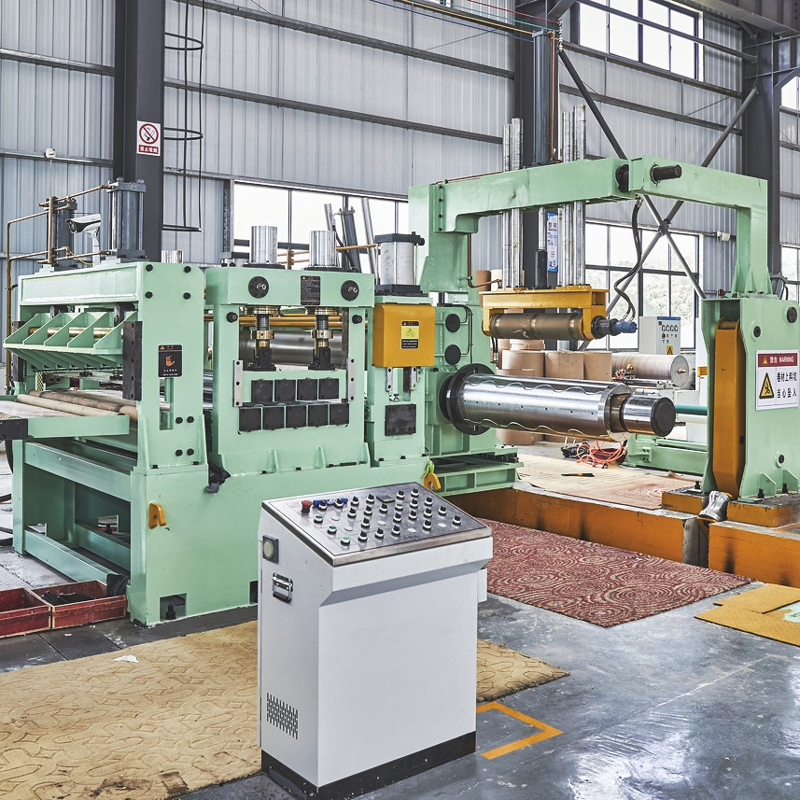
The metal fabrication industry is undergoing a significant transformation driven by digitalization and artificial intelligence (AI). As manufacturers face increasing pressure to improve productivity, reduce costs, maintain quality, and respond quickly to market demands, traditional metal cutting equipment is evolving into intelligent, connected, and highly automated production systems. From laser cutting machines and plasma cutters to CNC machining centers and slitting lines, AI-powered technologies are reshaping how metal processing operations are managed and optimized.
The next generation of metal cutting equipment is no longer defined solely by cutting speed or mechanical precision. Instead, it is characterized by its ability to collect, analyze, and utilize data in real time, enabling smarter decision-making, predictive maintenance, autonomous optimization, and seamless integration into modern smart factories.
The Digital Transformation of Metal Cutting Operations
Digitalization refers to the adoption of digital technologies throughout manufacturing processes. In metal cutting applications, this transformation begins with the integration of sensors, software platforms, cloud computing, and Industrial Internet of Things (IIoT) technologies.
Modern metal cutting machines are equipped with numerous sensors that continuously monitor critical operating parameters such as:
- Cutting speed
- Tool wear
- Vibration levels
- Temperature
- Material thickness
- Power consumption
- Machine positioning accuracy
These sensors generate valuable data that can be transmitted to centralized monitoring systems. Manufacturers can then gain real-time visibility into machine performance, production status, and process efficiency.
Unlike conventional machines that operate independently, digitally connected cutting systems communicate with enterprise resource planning (ERP), manufacturing execution systems (MES), and factory automation platforms. This connectivity allows manufacturers to optimize production scheduling, material flow, and machine utilization across the entire production facility.
As a result, digitalization helps companies reduce downtime, improve productivity, and increase overall operational efficiency.
AI-Powered Process Optimization
Artificial intelligence is taking digital manufacturing to the next level by transforming raw machine data into actionable insights.
Traditional cutting operations often rely heavily on operator experience to determine optimal cutting parameters. Factors such as feed rates, cutting speed, gas pressure, tool selection, and material characteristics require constant adjustment to achieve the desired results.
AI algorithms can analyze thousands of production variables simultaneously and automatically identify the most efficient operating conditions.
For example, in laser cutting applications, AI systems can:
- Optimize cutting paths
- Adjust laser power automatically
- Modify feed rates based on material conditions
- Minimize scrap generation
- Improve edge quality
The system continuously learns from historical production data and becomes more accurate over time. This capability significantly reduces human intervention while ensuring consistent production quality.
In high-volume manufacturing environments, even small improvements in cutting efficiency can generate substantial cost savings. AI-driven optimization enables manufacturers to maximize throughput while reducing energy consumption and material waste.
Predictive Maintenance Reduces Downtime
One of the most valuable applications of AI in metal cutting equipment is predictive maintenance.
Unexpected machine failures can result in costly production interruptions, missed delivery deadlines, and expensive repairs. Traditional maintenance strategies are often reactive, addressing problems only after equipment breakdown occurs.
Predictive maintenance changes this approach entirely.
By continuously monitoring machine conditions, AI systems can identify early signs of component wear or abnormal operating behavior. Machine learning algorithms analyze patterns in vibration, temperature, spindle performance, motor current, and other operational indicators.
When potential issues are detected, the system alerts maintenance personnel before a failure occurs.
Examples include:
- Bearing wear detection
- Servo motor performance degradation
- Laser source abnormalities
- Hydraulic system faults
- Tool wear prediction
This proactive maintenance strategy offers several benefits:
- Reduced unplanned downtime
- Extended equipment lifespan
- Lower maintenance costs
- Improved production reliability
- Increased machine availability
Manufacturers can schedule maintenance activities during planned production breaks rather than responding to unexpected emergencies.
Smart CNC Systems and Autonomous Programming
Computer Numerical Control (CNC) technology remains the foundation of modern metal cutting equipment. However, AI is transforming conventional CNC systems into intelligent manufacturing platforms.
Advanced AI-enabled CNC machines can automatically generate machining strategies based on CAD models and production requirements.
Instead of requiring extensive manual programming, operators can upload design files directly into the system. AI software analyzes part geometry and automatically determines:
- Tool selection
- Machining sequence
- Cutting parameters
- Toolpath optimization
- Material utilization strategies
This significantly reduces programming time and minimizes the risk of human errors.
Some advanced systems are even capable of adaptive machining, where cutting parameters are adjusted dynamically during production based on real-time feedback from sensors.
For manufacturers handling diverse product portfolios and small-batch production, autonomous programming improves flexibility while reducing setup times.
Digital Twins Enhance Production Efficiency
Digital twin technology is emerging as a powerful tool in the metal cutting industry.
A digital twin is a virtual replica of a physical machine, production line, or manufacturing process. It continuously receives real-time data from the actual equipment and mirrors its operating conditions.
Manufacturers can use digital twins to:
- Simulate production scenarios
- Optimize machine configurations
- Test process changes
- Predict equipment performance
- Identify bottlenecks
Before implementing adjustments on the factory floor, engineers can evaluate different strategies within the digital environment.
This reduces risks associated with process modifications and accelerates decision-making.
Digital twins are particularly valuable in complex metal processing operations involving multiple cutting, forming, and assembly stages, where process interactions can significantly impact productivity.
Intelligent Quality Control Systems
Quality assurance is another area where AI is delivering significant improvements.
Traditional inspection methods often depend on manual measurements and visual inspections. These approaches can be time-consuming and subject to human error.
AI-powered vision systems use high-resolution cameras and machine learning algorithms to inspect cut parts automatically.
These systems can identify:
- Surface defects
- Dimensional inaccuracies
- Burr formation
- Edge irregularities
- Material inconsistencies
Inspection results are analyzed instantly, allowing corrective actions to be implemented before defects affect larger production batches.
Some intelligent systems can even adjust cutting parameters automatically when quality deviations are detected, creating a closed-loop manufacturing process that continuously maintains optimal performance.
This level of automation enhances product consistency and reduces scrap rates.
Cloud Connectivity and Remote Monitoring
The adoption of cloud-based technologies is expanding rapidly across the manufacturing sector.
Cloud-connected metal cutting equipment allows managers, engineers, and service providers to access machine data from virtually anywhere.
Remote monitoring platforms provide real-time information regarding:
- Machine status
- Production progress
- Maintenance requirements
- Energy consumption
- Performance metrics
This capability is particularly valuable for companies operating multiple production facilities.
Machine suppliers can also offer remote diagnostics and software updates, reducing service response times and minimizing disruptions.
Cloud-based analytics further enable manufacturers to compare performance across different machines, production lines, and facilities, supporting continuous improvement initiatives.
Energy Efficiency Through Intelligent Automation
Sustainability has become a major priority for manufacturers worldwide.
Metal cutting operations often consume significant amounts of electricity, compressed air, and process gases. Rising energy costs and environmental regulations are driving demand for more efficient equipment.
AI and digitalization contribute to sustainability by optimizing resource consumption.
Intelligent systems can:
- Reduce idle machine operation
- Optimize energy-intensive cutting cycles
- Minimize material waste
- Improve nesting efficiency
- Lower gas consumption
By analyzing production patterns, AI can identify opportunities to reduce energy usage without sacrificing productivity.
These improvements support both environmental objectives and operational profitability.
Challenges in Digital Adoption
Despite the numerous benefits, implementing digital and AI-driven metal cutting technologies presents certain challenges.
Manufacturers must address issues such as:
- Initial investment costs
- Workforce training requirements
- Cybersecurity concerns
- Data management complexity
- Integration with legacy equipment
Successful implementation requires a strategic approach that combines technology investments with organizational readiness.
Companies must ensure that employees possess the necessary digital skills to operate and manage intelligent manufacturing systems effectively.
At the same time, robust cybersecurity measures are essential to protect connected production environments from potential threats.
The Future of Intelligent Metal Cutting Equipment
The future of metal cutting equipment will be increasingly defined by connectivity, automation, and intelligence.
Advances in artificial intelligence, machine learning, robotics, edge computing, and industrial networking will continue to drive innovation across the sector. Future systems are expected to become more autonomous, capable of self-optimization, self-diagnosis, and even self-correction.
Manufacturers will benefit from greater flexibility, faster production cycles, higher quality standards, and improved resource efficiency. Smart factories equipped with AI-enabled metal cutting machines will be better positioned to respond to changing customer demands and increasingly competitive global markets.
As digitalization accelerates throughout the manufacturing industry, metal cutting equipment is evolving from a standalone production tool into an intelligent, data-driven asset that plays a central role in modern industrial ecosystems. Companies that embrace these technologies today will gain a significant competitive advantage in the manufacturing landscape of tomorrow.