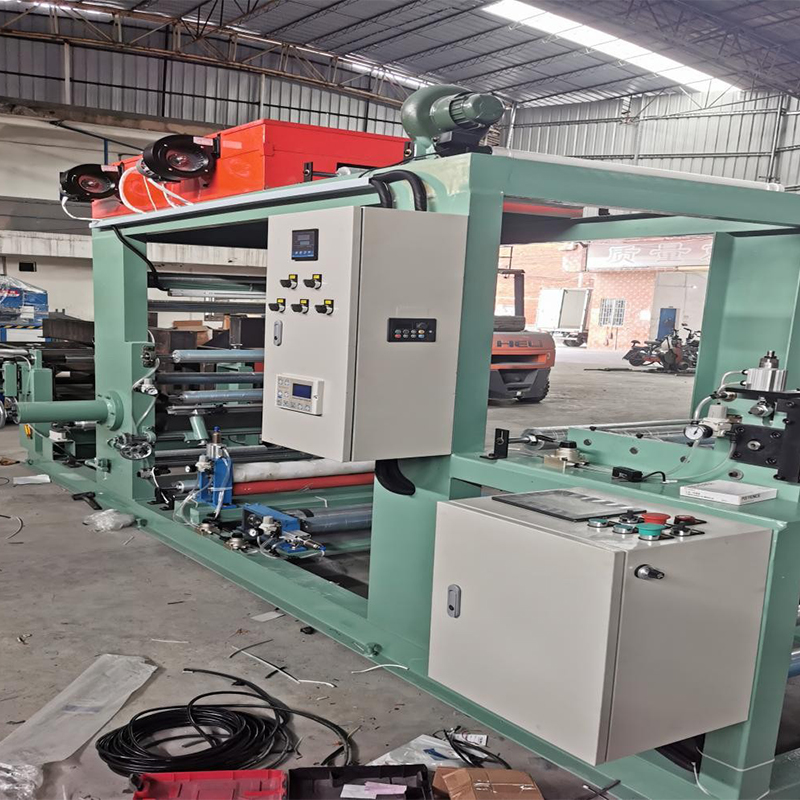
As the global demand for lightweight, high-strength, and sustainable building materials continues to grow, Aluminum Honeycomb Panels have become a preferred solution for architectural facades, curtain walls, transportation, marine engineering, clean rooms, and industrial applications. To remain competitive, manufacturers are increasingly investing in advanced Aluminum Honeycomb Panel Production Lines that deliver higher efficiency, consistent quality, and lower production costs.
However, choosing the right production line is a significant investment. A machine that is ideal for one factory may not suit another due to differences in production capacity, product specifications, factory layout, automation requirements, and target markets.
This guide explains the most important factors to consider when selecting an Aluminum Honeycomb Panel Production Line for your factory.
Understand Your Production Requirements
Before contacting equipment manufacturers, define your production goals clearly. Your production line should match your current business while allowing room for future expansion.
Consider the following questions:
- What types of aluminum honeycomb panels will you manufacture?
- What is your expected annual production volume?
- Which industries will you supply?
- Do you require customized panel sizes?
- What panel thicknesses will you produce?
- Will your products be used for interior or exterior applications?
A clear understanding of your production requirements will help suppliers recommend the most suitable equipment configuration.
Determine the Required Production Capacity
Production capacity is one of the first specifications buyers should evaluate.
| Factory Scale | Daily Capacity | Recommended Automation |
|---|---|---|
| Small Factory | 200–500 Panels | Semi-Automatic |
| Medium Factory | 500–1,500 Panels | Automatic |
| Large Factory | 1,500–3,000+ Panels | Fully Automatic |
Choosing excessive capacity increases investment and operating costs, while insufficient capacity may create production bottlenecks as demand grows.
Whenever possible, select equipment that allows future capacity upgrades.
Evaluate the Level of Automation
Modern Aluminum Honeycomb Panel Production Lines are available in several automation levels.
Semi-Automatic Production Line
Suitable for:
- New manufacturers
- Small production volumes
- Limited investment budgets
Advantages:
- Lower equipment cost
- Easier maintenance
- Flexible production
Limitations:
- Higher labor costs
- Lower production efficiency
- Greater dependence on operator skills
Fully Automatic Production Line
Ideal for:
- Large-scale factories
- Export-oriented manufacturers
- Continuous production
Advantages include:
- Stable product quality
- Higher production speed
- Reduced labor requirements
- Lower production errors
- Better production data management
Although the initial investment is higher, fully automated lines generally offer a faster return on investment for medium and large manufacturers.
Check Product Compatibility
Not every production line can manufacture every type of aluminum honeycomb panel.
Confirm that the equipment supports your required specifications.
Typical production capabilities include:
| Specification | Typical Range |
| Panel Width | 600–2,000 mm |
| Panel Length | Up to 6,000 mm |
| Panel Thickness | 6–100 mm |
| Aluminum Skin Thickness | 0.5–3.0 mm |
| Honeycomb Cell Size | 4–25 mm |
If your factory plans to produce customized products, ensure the line can accommodate various dimensions and materials without lengthy setup times.
Review the Production Process
A complete Aluminum Honeycomb Panel Production Line should include all major manufacturing stages.
Typical workflow:
- Aluminum coil feeding
- Honeycomb core expansion
- Surface cleaning
- Adhesive coating
- Core positioning
- Panel lamination
- Hot pressing
- Cooling
- Edge trimming
- CNC cutting
- Quality inspection
- Packaging
Integrated production lines improve efficiency while minimizing material handling and manual intervention.
Pay Attention to Core Equipment
The performance of the production line depends on the quality of its key machines.
Important equipment includes:
Honeycomb Core Expansion Machine
Ensures accurate honeycomb cell geometry and uniform expansion.
Adhesive Coating Machine
Provides consistent adhesive thickness to achieve reliable bonding strength.
Laminating Machine
Aligns aluminum skins and honeycomb cores with high precision.
Hot Press Machine
Controls pressure, temperature, and curing time to produce durable sandwich panels.
CNC Cutting Machine
Cuts finished panels according to customer specifications with excellent dimensional accuracy.
High-quality equipment reduces production defects and increases manufacturing efficiency.
Evaluate the Control System
An advanced control system greatly improves productivity and operational stability.
Look for features such as:
- PLC control
- Touchscreen interface
- Servo motor synchronization
- Automatic parameter adjustment
- Recipe storage
- Production data recording
- Alarm diagnostics
- Remote technical support
Smart control systems also simplify operator training and reduce setup time when changing product specifications.
Consider Energy Efficiency
Energy consumption has become an important factor in manufacturing costs.
Modern production lines often include:
- Energy-saving motors
- Intelligent heating control
- Variable-frequency drives
- Automatic standby mode
- Optimized hydraulic systems
Lower energy consumption reduces operating costs and supports sustainability goals.
Evaluate Quality Control Features
Consistent product quality depends on effective inspection throughout the manufacturing process.
Advanced production lines may include:
- Automatic thickness measurement
- Surface defect detection
- Laser positioning systems
- Pressure monitoring
- Temperature monitoring
- Adhesive application control
- Vision inspection systems
These features help minimize defects, improve yield, and reduce material waste.
Assess Supplier Experience
The production line is only part of your investment. Choosing an experienced manufacturer is equally important.
Consider the supplier’s:
- Years of industry experience
- Engineering capabilities
- Manufacturing facilities
- Export experience
- Customer references
- Installation services
- Technical training
- After-sales support
- Spare parts availability
- Customization capabilities
An experienced supplier can help optimize factory layout, improve production efficiency, and provide long-term technical assistance.
Compare Total Investment Cost
The purchase price should not be the only consideration.
Calculate the total cost of ownership, including:
- Equipment price
- Shipping
- Installation
- Factory preparation
- Electrical systems
- Air compressor
- Raw materials
- Operator training
- Maintenance
- Spare parts
- Energy consumption
- Labor costs
A production line with a slightly higher purchase price may provide lower operating costs and greater profitability over its lifetime.
Plan for Future Expansion
Market demand can change rapidly. Choose equipment that supports future growth.
Look for production lines that can be upgraded with:
- Automatic stacking systems
- Additional hot press machines
- CNC machining centers
- Robotic material handling
- Online inspection systems
- MES integration
- Smart factory solutions
Scalable equipment protects your investment and reduces the need for complete production line replacement.
Questions to Ask Your Equipment Supplier
Before making a final decision, ask these important questions:
- What production capacity can the line achieve?
- Which aluminum alloys are supported?
- Which adhesive systems are compatible?
- What panel dimensions can be produced?
- How many operators are required?
- What is the average production speed?
- How long does installation take?
- Is overseas commissioning available?
- What technical training is provided?
- How quickly can spare parts be supplied?
- Can the production line be customized?
- What warranty and after-sales services are included?
Clear answers to these questions help minimize investment risks.
Conclusion
Choosing the right Aluminum Honeycomb Panel Production Line is a strategic decision that directly affects product quality, manufacturing efficiency, operating costs, and long-term profitability.
Instead of focusing only on the initial equipment price, evaluate the complete production solution—including automation level, production capacity, machine quality, energy efficiency, supplier expertise, technical support, and scalability.
By selecting a production line that aligns with your factory’s current needs while allowing for future expansion, you can build a reliable, competitive, and highly efficient manufacturing operation capable of meeting the growing global demand for aluminum honeycomb panels.