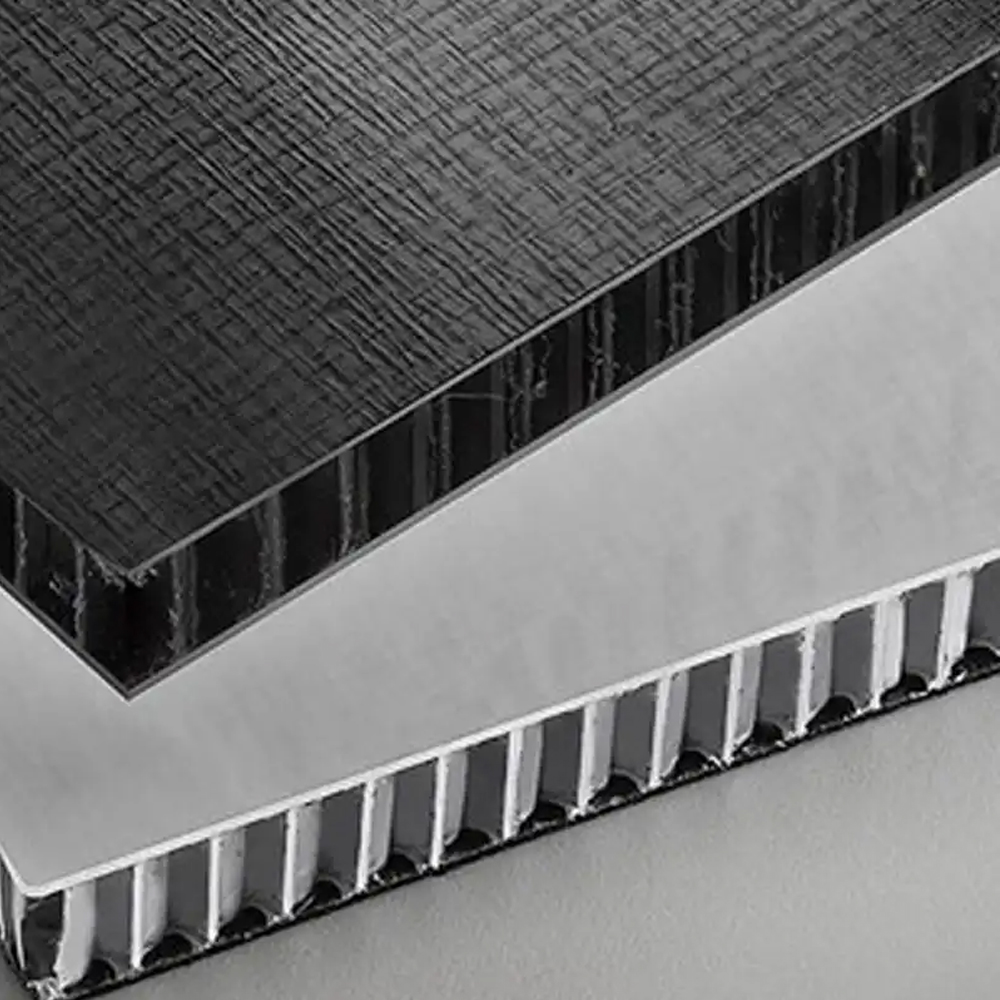
Increasing the output of an Aluminum Honeycomb Panel Production Line does not always mean purchasing faster machinery.
In many factories, production capacity is lost through bottlenecks, manual handling, long pressing cycles, inefficient material preparation, frequent changeovers, equipment downtime, and rejected panels.
A better approach is to analyze the complete production process and identify where output is being lost.
1. Identify the Production Bottleneck
The first step is to determine which process limits the entire line.
For example:
| Production Process | Capacity |
|---|---|
| Material Preparation | 100 m²/h |
| Adhesive Application | 90 m²/h |
| Assembly | 75 m²/h |
| Pressing | 50 m²/h |
| Cutting | 85 m²/h |
The production line cannot effectively produce 100 m²/h because the pressing stage can process only 50 m²/h.
Therefore, increasing the speed of material preparation will not solve the problem.
The factory should first improve the bottleneck.
2. Optimize Pressing Capacity
Pressing is often one of the critical stages in composite panel production.
Production capacity can be improved by optimizing:
- Pressing cycle
- Loading arrangement
- Press size
- Number of pressing positions
- Pressure control
- Temperature control
- Curing conditions
However, pressing time should not be reduced blindly.
If insufficient pressure or curing time causes poor bonding, the factory may produce more panels but also create a higher rejection rate.
The correct objective is:
Higher Output + Stable Bonding Quality
3. Improve Material Preparation
Production interruptions often begin before the main machine starts.
Materials should be prepared according to the production schedule.
Common materials include:
- Aluminum sheets
- Aluminum honeycomb cores
- Adhesive
- Protective film
- Edge materials
- Packaging materials
When materials are prepared in advance, operators do not need to stop production to search for or prepare components.
4. Reduce Manual Material Handling
Manual handling can become a major bottleneck as output increases.
An automated conveying system can connect different production stations.
For example:
Loading → Gluing → Assembly → Pressing → Conveying → Cutting → Unloading
This reduces unnecessary movement and helps maintain continuous production.
5. Improve Adhesive Application
Inconsistent adhesive application can cause both quality problems and production delays.
A modern Aluminum Honeycomb Panel Production Machine can use controlled adhesive application to improve consistency.
The objective is not simply to apply adhesive faster.
The objective is to achieve:
- Consistent coating
- Controlled adhesive consumption
- Stable bonding
- Reduced manual labor
- Less rework
Reducing rework can increase effective production without increasing the machine’s rated speed.
6. Reduce Product Changeover Time
Factories producing multiple panel specifications may lose significant production time during changeovers.
Changeover may involve:
- Equipment adjustment
- Worktable adjustment
- Cutting parameter changes
- Adhesive settings
- Tool replacement
- Material repositioning
Standardized production procedures can reduce this time.
For larger factories, production scheduling can also group similar products together.
7. Increase Automation
Automation is one of the most effective methods for increasing production output when manual handling is the bottleneck.
A properly designed Automatic Aluminum Honeycomb Panel Production Line can coordinate several processes.
Automation can improve:
- Material flow
- Production consistency
- Machine utilization
- Labor efficiency
- Production speed
However, automation should be applied to the actual bottleneck instead of simply adding automated machines everywhere.
8. Reduce Equipment Downtime
Suppose a production line is theoretically capable of producing 800 m²/day but loses one hour every day because of equipment problems.
At a production speed of 100 m²/hour, that represents approximately:
100 m²/day of lost capacity
Preventive maintenance can help reduce these losses.
Important maintenance activities include:
- Cleaning
- Lubrication
- Electrical inspection
- Sensor inspection
- Conveyor inspection
- Adhesive system maintenance
- Press system inspection
9. Improve Quality to Increase Effective Output
Quality and production capacity are directly connected.
Imagine a factory produces 600 m²/day but has a 10% rejection or rework rate.
Effective output:
600 × 90% = 540 m²/day
If the rejection rate is reduced to 4%:
600 × 96% = 576 m²/day
The factory gains:
36 m²/day
without increasing the machine’s rated speed.
This is why quality improvement should be considered part of capacity improvement.
10. Use Production Data
Manufacturers should measure actual production performance instead of relying on assumptions.
Useful data includes:
- Production time
- Downtime
- Output per hour
- Output per shift
- Reject rate
- Rework rate
- Changeover time
- Maintenance time
- Labor hours
This data makes bottlenecks easier to identify.
Should You Buy a Faster Machine?
Sometimes upgrading equipment is necessary.
However, purchasing a faster machine should normally come after identifying the current bottleneck.
For example, if the factory’s pressing process limits production to 50 m²/hour, purchasing a cutting machine capable of 150 m²/hour will not increase total production.
The investment should target the limiting process.
When Should You Upgrade the Entire Production Line?
A complete Aluminum Honeycomb Panel Production Line upgrade may be justified when:
- Existing machines are outdated
- Manual handling is excessive
- Production demand has increased significantly
- Quality consistency is poor
- Downtime is high
- Labor costs have increased
- Current equipment cannot be expanded
In this situation, an integrated production system may provide better long-term performance.
Final Thoughts
Increasing aluminum honeycomb panel production output requires a system-level approach.
The most effective strategies often include:
Bottleneck Analysis → Better Material Flow → Automation → Faster Changeover → Preventive Maintenance → Quality Improvement
The goal is not simply to make individual machines run faster.
The goal is to increase the amount of good-quality finished panel output per working day.
For manufacturers planning equipment upgrades, production-line suppliers should evaluate the entire manufacturing process before recommending additional machines or automation modules.