Introduction
In the metal processing industry, both Slitting Lines and Cut To Length (CTL) Lines are essential production systems used to transform master coils into usable materials for downstream manufacturing. Although both machines begin with metal coils and perform precision processing, their functions, outputs, and applications are significantly different.
Choosing the right equipment is critical for steel service centers, metal distributors, automotive suppliers, appliance manufacturers, and construction material producers. Understanding the differences between a slitting line and a cut-to-length line can help companies improve productivity, reduce material waste, and optimize investment costs.
This article provides a detailed comparison of Slitting Lines and Cut To Length Lines, including their working principles, applications, advantages, and selection criteria.
What Is a Slitting Line?
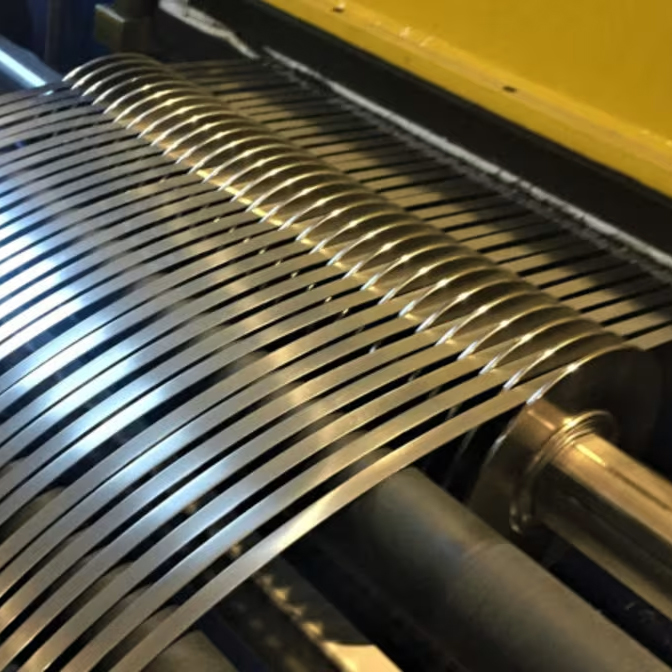
A Slitting Line is designed to cut a wide metal coil longitudinally into multiple narrower strips. The finished products remain in coil form and are rewound after slitting.
Process Flow
Coil Loading → Uncoiling → Leveling → Slitting → Scrap Winding → Tension Control → Recoiling
Output Product
- Narrow slit coils
- Multiple coil widths from one master coil
- Continuous rolled material
Typical Applications
- Tube manufacturing
- Roll forming
- Automotive components
- Cable trays
- Steel framing
- Appliance parts
The primary purpose of a slitting line is width reduction while maintaining continuous coil production.
What Is a Cut To Length Line?
A Cut To Length Line (CTL Line) is designed to uncoil, level, and cut metal coils into flat sheets of specific lengths.
Process Flow
Coil Loading → Uncoiling → Leveling → Length Measurement → Shearing → Stacking
Output Product
- Flat sheets
- Metal blanks
- Plates
- Panels
Typical Applications
- Construction panels
- HVAC equipment
- Home appliances
- Metal furniture
- Shipbuilding
- Heavy equipment manufacturing
The primary purpose of a CTL line is producing flat sheets with accurate lengths and excellent flatness.
Core Difference Between Slitting Line and CTL Line
The biggest difference lies in the direction of cutting.
| Item | Slitting Line | Cut To Length Line |
|---|---|---|
| Cutting Direction | Longitudinal Cutting | Transverse Cutting |
| Final Product | Narrow Coils | Flat Sheets |
| Main Function | Width Reduction | Length Cutting |
| Output Form | Recoiled Strips | Stacked Sheets |
| Typical Customers | Roll Formers, Tube Mills | Sheet Fabricators |
| Production Method | Continuous Coil Processing | Sheet Production |
In simple terms:
Slitting Lines cut width.
Cut To Length Lines cut length.
Equipment Comparison
Slitting Line Main Components
A standard slitting line typically includes:
- Coil Car
- Uncoiler
- Pinch Roller
- Leveler
- Slitting Head
- Scrap Winder
- Tension Station
- Recoiler
The slitting head is the core component responsible for dividing the strip into multiple widths.
Cut To Length Line Main Components
A CTL line generally consists of:
- Coil Car
- Uncoiler
- Precision Leveler
- Length Measuring System
- Flying Shear
- Stacker
The leveling system and shear unit are the most important sections for achieving flatness and dimensional accuracy.
Production Output Comparison
Slitting Line Example
Input:
- Coil Width: 1500 mm
Output:
- 5 coils × 300 mm width
One master coil becomes five narrower coils.
Cut To Length Line Example
Input:
- Coil Width: 1500 mm
Output:
- 1500 mm × 3000 mm sheets
The width remains unchanged while the coil is cut into individual sheets.
Accuracy Comparison
Both systems require high precision, but they focus on different parameters.
| Quality Indicator | Slitting Line | CTL Line |
|---|---|---|
| Width Accuracy | Critical | Standard |
| Length Accuracy | Less Important | Critical |
| Edge Quality | Critical | Moderate |
| Flatness | Moderate | Critical |
| Coil Shape | Critical | Not Applicable |
Slitting Line Focus
- Width tolerance
- Burr control
- Edge quality
- Coil winding quality
CTL Line Focus
- Length tolerance
- Flatness
- Squareness
- Surface quality
Industry Applications Comparison
Industries Using Slitting Lines
Steel Service Centers
Provide customized slit coils to customers.
Tube and Pipe Manufacturing
Slit coils are processed into welded tubes.
Roll Forming Industry
Roofing panels, shelving, and structural profiles require narrow coils.
Automotive Components
Many stamped parts begin as slit coil stock.
Industries Using CTL Lines
Construction Industry
Wall panels, roofing sheets, and building components.
Home Appliance Manufacturing
Refrigerators, ovens, washing machines, and air conditioners.
Elevator Manufacturing
Decorative stainless steel sheets.
Shipbuilding and Heavy Equipment
Large steel plates and precision sheet materials.
Investment and Operating Cost Comparison
| Item | Slitting Line | CTL Line |
|---|---|---|
| Initial Investment | High | Medium to High |
| Tooling Cost | High | Lower |
| Maintenance | Moderate | Moderate |
| Production Flexibility | Excellent | Good |
| Labor Requirement | Low | Low |
Slitting lines often require more tooling investment because multiple circular knives and spacers must be maintained and replaced regularly.
CTL lines generally focus more on leveling precision and shear performance.
Which Machine Should You Choose?
The decision depends on the desired final product.
Choose a Slitting Line If:
You need:
- Narrow coils
- Coil-fed production
- Tube manufacturing material
- Roll forming stock
- Customized coil widths
Ideal for:
- Steel service centers
- Tube mills
- Automotive suppliers
- Roll forming factories
Choose a Cut To Length Line If:
You need:
- Flat sheets
- Precision blanks
- Metal plates
- Panel production
Ideal for:
- Construction material producers
- Appliance manufacturers
- Fabrication workshops
- Heavy equipment manufacturers
Can a Factory Use Both?
Many large steel processing centers invest in both systems.
A common workflow is:
- Receive master coil.
- Use a Slitting Line to create narrower coils.
- Feed slit coils into downstream production.
- Use a CTL Line to produce flat sheets when sheet products are required.
This combination provides maximum flexibility and allows service centers to serve a broader range of customers.
Future Trends
With the development of smart manufacturing and Industry 4.0 technologies, both slitting lines and CTL lines are becoming increasingly automated.
Emerging technologies include:
- AI-based process optimization
- Automatic tool positioning
- Servo-driven feeding systems
- Real-time quality monitoring
- Predictive maintenance
- Remote diagnostics
These innovations improve production efficiency while reducing downtime and labor costs.
Conclusion
Although Slitting Lines and Cut To Length Lines both process metal coils, they serve fundamentally different purposes. A Slitting Line converts wide coils into narrower coils through longitudinal cutting, while a Cut To Length Line transforms coils into flat sheets through transverse cutting.
For manufacturers requiring coil-fed production materials, a slitting line is the ideal solution. For companies producing flat panels, blanks, and sheets, a CTL line offers the necessary precision and efficiency. Understanding these differences allows businesses to select the right equipment, optimize production workflows, and maximize return on investment in today’s competitive metal processing industry.