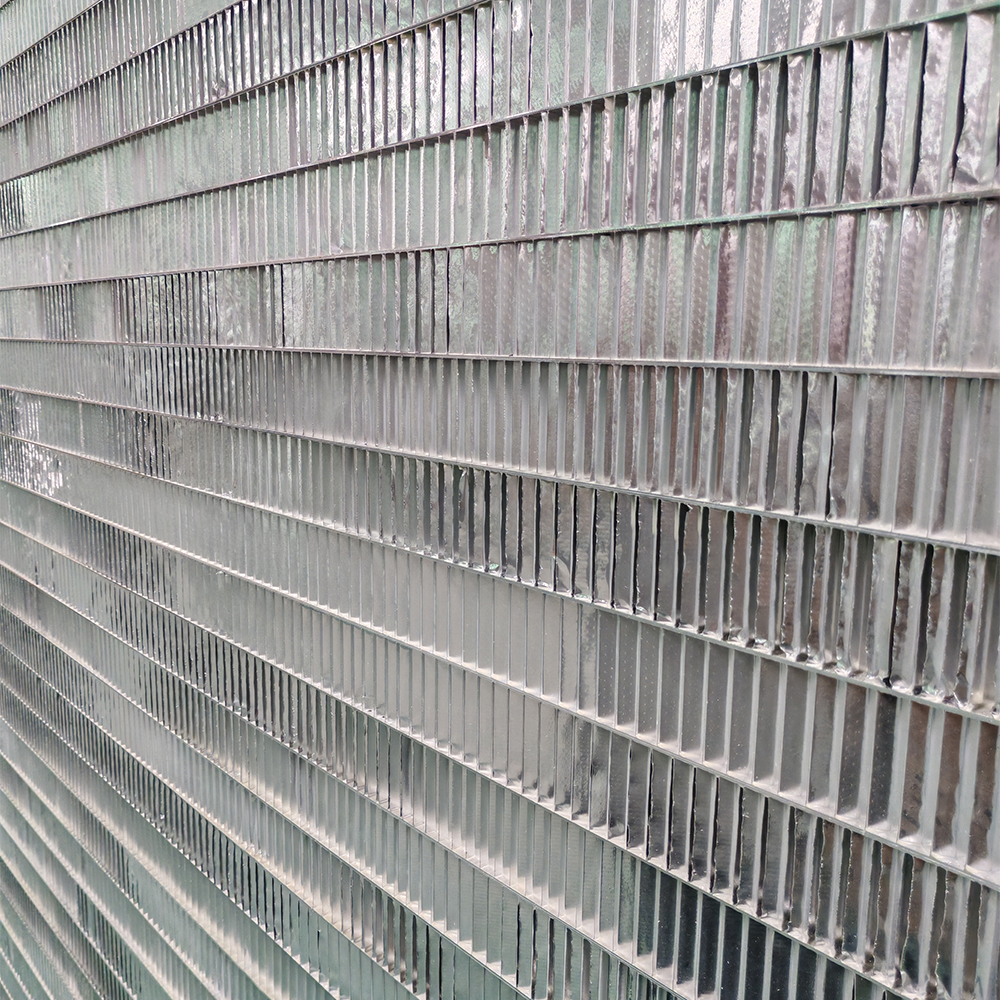
When customers evaluate aluminum honeycomb panels, they often focus on appearance first. However, the actual quality of an aluminum honeycomb panel depends on much more than surface appearance.
The performance and consistency of an Aluminum Honeycomb Panel are influenced by the aluminum skins, honeycomb core, adhesive system, bonding process, pressing conditions, dimensional accuracy, surface treatment, and production equipment.
For manufacturers, understanding these factors is essential when selecting an Aluminum Honeycomb Panel Production Machine or planning a complete production line.
1. Aluminum Sheet Quality
The aluminum sheet is one of the primary structural and visual components of a honeycomb panel.
Important characteristics may include:
- Aluminum alloy
- Sheet thickness
- Surface condition
- Flatness
- Coating quality
- Dimensional accuracy
The selected aluminum specification should match the intended application.
Architectural panels, transportation panels, marine interiors, ceilings, doors, and industrial applications can have different material requirements.
Even a well-designed production machine cannot compensate for inconsistent raw materials.
2. Honeycomb Core Quality
The honeycomb core provides lightweight structural support between the aluminum skins.
Important core parameters can include:
- Core thickness
- Cell size
- Density
- Cell geometry
- Flatness
- Material consistency
An uneven or damaged honeycomb core can affect panel thickness, flatness, bonding, and final appearance.
Therefore, incoming core inspection is an important part of production quality management.
3. Adhesive Selection
The adhesive forms the bonding layer between the aluminum skins and honeycomb core.
Different applications may require different adhesive systems depending on:
- Required bonding strength
- Working temperature
- Production process
- Curing method
- Environmental conditions
- Application requirements
The adhesive should be compatible with both the aluminum surface and honeycomb core.
4. Adhesive Application
Selecting the correct adhesive is only the beginning.
The application process also affects final panel quality.
Important parameters include:
Coating Amount + Uniformity + Mixing Ratio + Application Speed + Working Time
Insufficient adhesive coverage may result in weak bonding.
Excessive adhesive can increase material consumption, weight, curing time, and production cost.
An automated adhesive application system can help improve coating consistency across large production batches.
5. Surface Preparation
The aluminum bonding surface needs to be properly prepared before adhesive application.
Dust, oil, moisture, oxidation, and other contaminants can interfere with adhesion.
Depending on the manufacturing process, surface preparation may involve cleaning, treatment, or other controlled procedures.
A stable surface preparation process helps reduce bonding variation.
6. Panel Assembly Accuracy
During assembly, the aluminum sheet and honeycomb core must be correctly positioned.
Poor alignment may cause:
- Uneven panel edges
- Dimensional deviations
- Cutting problems
- Installation difficulties
- Visible appearance defects
Mechanical positioning fixtures can help improve repeatability.
This becomes particularly important when producing large-format panels.
7. Pressing Pressure
Pressing creates contact between the bonding surfaces and supports the adhesive bonding process.
Pressure needs to be appropriate for the panel construction.
If pressure is too low, sufficient contact may not be achieved.
If pressure is excessive, the honeycomb core or panel structure may be damaged or deformed.
Therefore, pressure should be controlled according to the material and adhesive process rather than simply using the highest possible pressure.
8. Pressing Temperature
For adhesive systems that require controlled temperature during curing, temperature uniformity can influence bonding quality.
Uneven temperature across a large pressing area can potentially produce variations in curing conditions.
A properly designed pressing system should therefore provide stable and controllable operating conditions.
9. Pressing Time and Curing
The adhesive needs sufficient time to develop the required bonding performance.
The required cycle depends on the adhesive system and production conditions.
Reducing pressing time may increase theoretical production capacity, but if the adhesive has not reached the required curing condition, the resulting panel may not meet the desired quality requirements.
This illustrates an important relationship:
Production Speed Must Be Balanced With Bonding Quality.
10. Flatness
Flatness is especially important for large decorative and architectural aluminum honeycomb panels.
Poor flatness can result from:
- Uneven adhesive distribution
- Uneven pressure
- Incorrect curing
- Material deformation
- Improper handling
- Improper storage
Controlling the entire production process is more effective than trying to correct flatness problems after production.
11. Dimensional Accuracy
Panel length, width, thickness, and diagonal dimensions should remain within the specified tolerances.
Automatic positioning and cutting equipment can improve repeatability.
For large-scale production, consistent dimensional accuracy helps reduce installation problems and material waste.
12. Surface Appearance
Surface appearance is particularly important for visible architectural applications.
Manufacturers may need to control:
- Scratches
- Dents
- Contamination
- Uneven surfaces
- Edge damage
- Coating defects
Production handling equipment should therefore be designed to minimize unnecessary contact and damage.
13. Equipment Precision
Production equipment directly affects manufacturing consistency.
A reliable Aluminum Honeycomb Panel Production Equipment system should provide stable control of important processes such as:
- Adhesive application
- Material positioning
- Pressing
- Temperature
- Cutting
- Conveying
Equipment precision becomes increasingly important as production volume increases.
Quality Is a System, Not a Single Parameter
It is difficult to define aluminum honeycomb panel quality using only one specification.
A high-quality panel is normally the result of multiple controlled factors:
Material Quality
↓
Surface Preparation
↓
Adhesive Control
↓
Accurate Assembly
↓
Controlled Pressing
↓
Accurate Cutting
↓
Final Inspection
If one stage is unstable, the final product may be affected.
Conclusion
The quality of an aluminum honeycomb panel is determined by the interaction of materials, adhesive technology, process parameters, equipment precision, operator control, and inspection procedures.
For manufacturers planning to purchase an Aluminum Honeycomb Panel Production Machine, it is therefore important to evaluate not only machine speed, but also how the equipment controls the critical manufacturing processes.
A production system designed around stable adhesive application, accurate positioning, controlled pressing, reliable material handling, and consistent cutting can provide a stronger foundation for long-term panel quality.
The ultimate objective is not simply to produce attractive panels. It is to produce consistent panels from the first piece to the last piece of every production batch.