A Coil Slitting Line is one of the most important pieces of equipment in the metal processing industry. It is designed to convert large metal coils into multiple narrower strips with precise widths according to customer requirements. These slit coils are widely used in industries such as automotive manufacturing, construction, home appliances, electrical equipment, steel service centers, and metal fabrication.
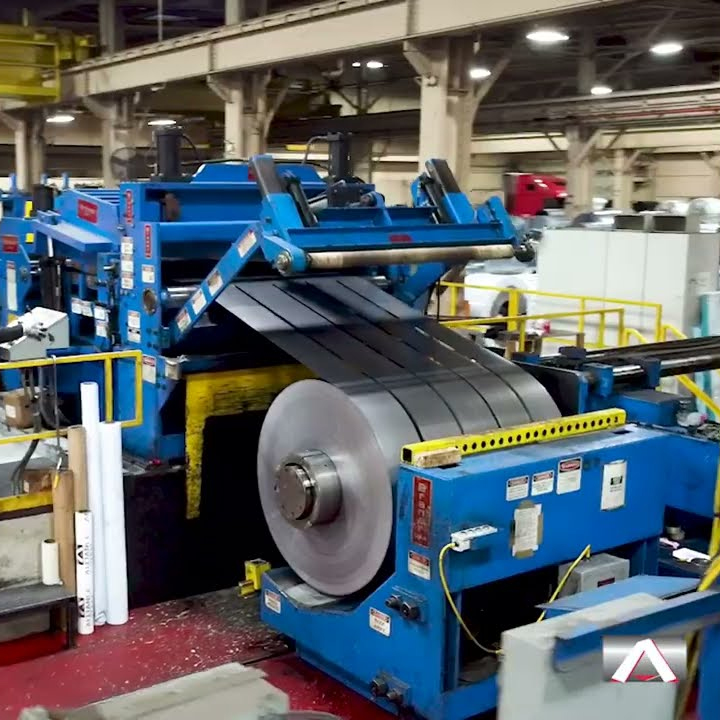
As global demand for precision metal products continues to increase, coil slitting technology has evolved significantly. Modern slitting lines offer higher speed, greater accuracy, reduced material waste, and improved automation, making them essential equipment for competitive manufacturers.
This article explains what a coil slitting line is, how it works, its main components, advantages, applications, and key factors to consider when selecting a slitting line.
What Is a Coil Slitting Line?
A coil slitting line is an automated production system that cuts a wide metal coil into several narrower coils by using rotating circular knives.
The process begins with a master coil being loaded onto the machine. The material passes through a series of components where it is leveled, guided, slit into multiple strips, tensioned, and finally recoiled into finished slit coils.
The machine can process various metal materials, including:
- Carbon Steel
- Stainless Steel
- Galvanized Steel
- Aluminum
- Copper
- Silicon Steel
- High-Strength Steel (HSS)
- Pre-painted Steel
The primary goal of a slitting line is to achieve high dimensional accuracy while maintaining excellent edge quality and production efficiency.
How Does a Coil Slitting Line Work?
The slitting process follows several key stages:
1. Coil Loading
The master coil is placed onto the uncoiler using a crane or coil car.
2. Coil Uncoiling
The uncoiler feeds the metal strip into the production line at a controlled speed.
3. Pinch and Leveling
A pinch roller and leveler flatten the material and remove coil set or deformation.
4. Slitting
Rotary slitting knives cut the metal strip longitudinally into multiple narrower strips.
5. Scrap Winding
Side trim scrap generated during slitting is collected by scrap winders.
6. Tension Control
A tension stand ensures stable strip feeding and prevents surface scratches.
7. Recoiling
The slit strips are rewound into finished coils by the recoiler.
8. Unloading
Finished coils are removed for packaging and shipment.
Typical Coil Slitting Line Process Flow
| Process Step | Function |
|---|---|
| Coil Car | Transfers master coil |
| Uncoiler | Holds and unwinds coil |
| Pinch Feeder | Feeds material |
| Leveler | Removes coil memory |
| Slitting Head | Cuts material into strips |
| Scrap Winder | Collects side scrap |
| Tension Stand | Maintains strip tension |
| Recoiler | Rewinds slit strips |
| Coil Car | Unloads finished coils |
Main Components of a Coil Slitting Line
Uncoiler
The uncoiler supports the master coil and ensures smooth feeding throughout the production process.
Features include:
- Hydraulic expansion
- Motorized rotation
- High load capacity
- Stable coil centering
Slitting Head
The slitting head is the core of the entire line.
It contains:
- Upper arbor
- Lower arbor
- Circular knives
- Spacers
- Precision bearings
The knife arrangement determines the width and quantity of slit strips.
Tension Station
Proper tension control is critical for obtaining high-quality slit coils.
Functions include:
- Preventing strip buckling
- Reducing edge waviness
- Improving recoiling quality
- Minimizing scratches
Recoiler
The recoiler winds the slit strips into finished coils.
Advanced recoilers provide:
- Hydraulic expansion
- Automatic tension adjustment
- Precise coil formation
- Fast unloading
Common Technical Specifications
The specifications of a coil slitting line vary depending on material thickness and production requirements.
Example Specification Table
| Item | Specification |
|---|---|
| Material | Carbon Steel / Stainless Steel |
| Coil Width | 300–2000 mm |
| Coil Thickness | 0.2–12 mm |
| Coil Weight | 5–35 Tons |
| Slitting Speed | 120–300 m/min |
| Width Tolerance | ±0.05 mm |
| Number of Strips | Up to 30 |
| Power Supply | Customized |
| Automation Level | Manual to Fully Automatic |
Types of Coil Slitting Lines
Light Gauge Slitting Line
Suitable for:
- Stainless steel
- Aluminum
- Thin galvanized steel
Thickness range:
0.2 mm – 3 mm
Advantages:
- High speed
- Excellent surface protection
- Precision cutting
Medium Gauge Slitting Line
Suitable for:
- Construction steel
- Appliance steel
- General industrial materials
Thickness range:
2 mm – 6 mm
Advantages:
- Versatility
- Cost-effectiveness
- Stable performance
Heavy Gauge Slitting Line
Suitable for:
- High-strength steel
- Structural steel
- Automotive steel
Thickness range:
6 mm – 12 mm+
Advantages:
- Heavy-duty structure
- High cutting force
- Long service life
Advantages of Using a Coil Slitting Line
Improved Production Efficiency
Modern automatic slitting lines can achieve speeds exceeding 200 m/min, significantly increasing output.
Benefits include:
- Reduced labor requirements
- Faster production cycles
- Continuous operation
High Precision
Advanced CNC-controlled systems ensure:
- Accurate strip widths
- Consistent edge quality
- Tight tolerance control
This is especially important for industries requiring precise dimensions.
Material Cost Savings
Accurate slitting minimizes scrap generation and improves material utilization.
Manufacturers can achieve:
- Lower raw material costs
- Reduced waste
- Higher profitability
Enhanced Product Quality
Precision slitting results in:
- Smooth edges
- Better coil shape
- Reduced burr formation
- Improved downstream processing
Greater Production Flexibility
One master coil can be converted into multiple slit widths according to customer specifications.
This flexibility allows manufacturers to respond quickly to market demands.
Applications of Coil Slitting Lines
Coil slitting lines serve a wide range of industries.
Automotive Industry
Applications include:
- Vehicle body panels
- Structural components
- Reinforcement parts
Construction Industry
Applications include:
- Roofing sheets
- Wall panels
- Steel framing systems
Home Appliance Manufacturing
Applications include:
- Refrigerators
- Washing machines
- Air conditioners
Electrical Industry
Applications include:
- Transformer laminations
- Electrical cabinets
- Cable trays
Metal Service Centers
Service centers use slitting lines to provide customized coil widths for various customers.
Automation Trends in Coil Slitting Technology
Industry 4.0 is transforming metal processing equipment.
Modern coil slitting lines increasingly feature:
| Technology | Benefits |
|---|---|
| PLC Control | Stable operation |
| HMI Touchscreen | Easy management |
| Servo Systems | Precise positioning |
| Automatic Knife Change | Reduced downtime |
| Remote Diagnostics | Faster maintenance |
| Data Collection | Production analysis |
These technologies improve productivity, reduce labor costs, and increase equipment reliability.
How to Choose the Right Coil Slitting Line
When investing in a slitting line, buyers should consider the following factors:
Material Type
Different materials require different knife designs and machine configurations.
Material Thickness
Machine structure and motor power must match the material thickness.
Production Capacity
Evaluate:
- Daily output
- Annual production volume
- Future expansion requirements
Slitting Accuracy
Check:
- Width tolerance
- Burr control
- Edge quality
Automation Level
Fully automatic systems provide:
- Higher productivity
- Lower labor costs
- Better consistency
Supplier Experience
A reliable manufacturer should offer:
- Engineering support
- Installation services
- Operator training
- Spare parts availability
- After-sales service
Future Outlook of the Coil Slitting Industry
The global metal processing industry continues to expand due to growth in construction, renewable energy, electric vehicles, and infrastructure development.
As manufacturers demand higher efficiency and tighter tolerances, the market is shifting toward:
- Intelligent automation
- AI-assisted production management
- Faster processing speeds
- Energy-efficient equipment
- Digital monitoring systems
Companies investing in advanced coil slitting technology will be better positioned to improve productivity and remain competitive in the global marketplace.
Conclusion
A Coil Slitting Line is a critical machine for converting wide metal coils into accurately sized narrow strips used across numerous industries. By combining precision cutting, automated control, and high-speed processing, modern slitting lines help manufacturers improve efficiency, reduce waste, and deliver superior product quality.
Whether processing stainless steel, aluminum, galvanized steel, or high-strength steel, selecting the right coil slitting line can significantly impact production performance and profitability. As automation and smart manufacturing continue to evolve, coil slitting lines will remain a cornerstone of modern metal processing operations.