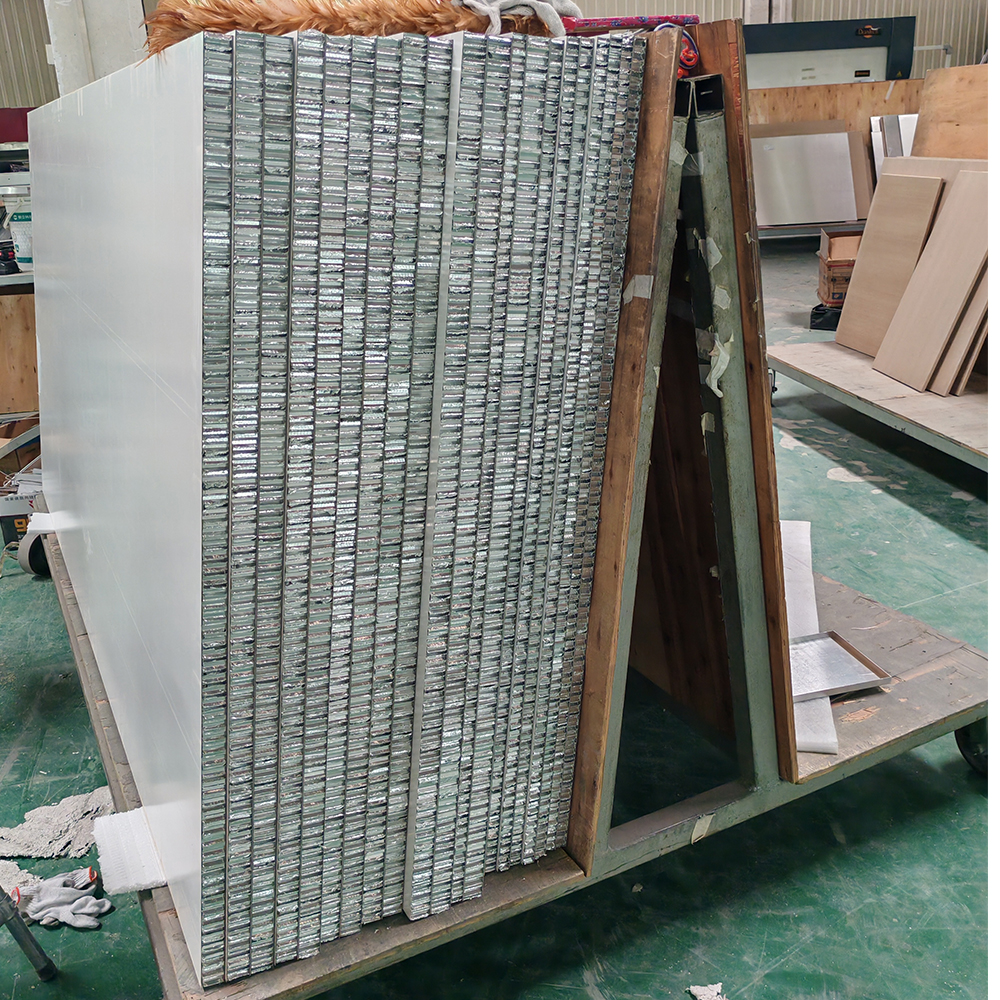
When manufacturers purchase an aluminum honeycomb panel machine, reliability is often more important than maximum advertised speed.
A production machine may operate correctly during a short demonstration but experience frequent stoppages under continuous industrial production. For a factory, unexpected downtime can affect delivery schedules, labor utilization, material consumption, and customer satisfaction.
So what makes an aluminum honeycomb panel manufacturing machine reliable?
The answer involves mechanical design, component quality, process control, automation, maintenance, and supplier support.
1. Stable Mechanical Structure
The machine frame is the foundation of the production system.
For pressing and laminating equipment, the structure needs to withstand repeated mechanical loads without significant deformation.
A stable frame helps maintain:
- Pressure consistency
- Panel flatness
- Equipment alignment
- Long-term positioning accuracy
For industrial equipment, mechanical stability should be considered over the expected operating life rather than only during initial testing.
2. Reliable Pressing System
The pressing system directly influences panel quality.
A reliable system should maintain consistent pressure across the working area.
Potential causes of instability include:
- Hydraulic leakage
- Uneven cylinders
- Sensor problems
- Mechanical wear
- Incorrect calibration
Regular maintenance and proper component selection are therefore important.
3. Consistent Adhesive Application
The adhesive system is another critical component.
A reliable glue application system should maintain stable operation and allow operators to control application parameters.
Important considerations include:
- Flow stability
- Coating uniformity
- Cleaning convenience
- Pump reliability
- Nozzle performance
- Control accuracy
If the adhesive system frequently stops or produces inconsistent coating, the entire production process can be affected.
4. Quality Electrical Components
Electrical components control the machine’s operating sequence.
These may include:
- PLC
- Touchscreen
- Sensors
- Relays
- Motors
- Drives
- Temperature controllers
The exact brands are less important than the suitability, availability, and maintainability of the components.
For overseas buyers, spare parts availability should also be considered.
5. Accurate Sensors and Control
Sensors allow the machine to detect position, temperature, pressure, speed, and other process conditions.
A reliable aluminum honeycomb panel production machine should provide stable feedback from important production stages.
For example, temperature sensors can help maintain heating conditions, while position sensors can improve repeatability during material handling.
6. Practical Automation
Automation should simplify production rather than make the machine unnecessarily complicated.
Useful automation may include:
- Automatic feeding
- Automatic glue application
- Automatic positioning
- Automatic pressing
- Automatic temperature control
- Automatic material transfer
- Automatic cutting
Each automated function should have a clear production benefit.
7. Easy Maintenance
Even a reliable machine requires maintenance.
A machine designed for industrial use should provide reasonable access to:
- Motors
- Pumps
- Electrical cabinets
- Sensors
- Hydraulic components
- Adhesive system
- Moving components
Maintenance points should be clearly identified in technical documentation.
8. Spare Parts Availability
For overseas factories, spare parts can have a major impact on downtime.
Before purchasing equipment, buyers should ask:
- Which parts are recommended as spare parts?
- Which components have a short service life?
- Can replacement parts be purchased separately?
- How quickly can spare parts be supplied?
- Are component models clearly documented?
A supplier should provide a practical spare-parts list rather than leaving buyers to identify components after a breakdown.
9. Factory Testing
Testing before shipment can reveal potential problems.
A proper machine test may include:
- Empty machine operation
- Material feeding test
- Adhesive application test
- Pressing test
- Temperature test
- Panel transfer test
- Cutting test
- Safety function test
- Continuous operation test
The more closely the test conditions match actual production, the more useful the test becomes.
10. Installation and Commissioning
A reliable machine also needs proper installation.
Incorrect installation can cause:
- Misalignment
- Vibration
- Electrical faults
- Inaccurate positioning
- Poor pressing performance
Therefore, installation instructions and commissioning support should be part of the purchasing discussion.
11. Operator Training
Operators need to understand more than how to start and stop the machine.
Training should cover:
- Normal operation
- Parameter adjustment
- Daily inspection
- Cleaning
- Lubrication
- Alarm handling
- Basic troubleshooting
- Safety procedures
Proper training can prevent many avoidable production problems.
12. Reliability Should Be Measured by Production Stability
When comparing equipment, buyers should consider questions such as:
How often does the machine stop?
How quickly can problems be diagnosed?
How easy is maintenance?
How quickly are spare parts available?
Can the supplier provide remote technical support?
These questions provide a more practical understanding of machine reliability than simply looking at machine specifications.
Reliability Checklist for Buyers
| Category | What to Check |
|---|---|
| Mechanical | Frame and structural stability |
| Hydraulic | Pressure stability and leakage control |
| Electrical | Control system and component availability |
| Adhesive | Flow and coating consistency |
| Sensors | Position and temperature feedback |
| Automation | Practical production functions |
| Maintenance | Access and maintenance points |
| Spare Parts | Availability and lead time |
| Testing | Factory acceptance testing |
| Service | Installation and troubleshooting |
Conclusion
A reliable aluminum honeycomb panel machine is not defined by one component.
Reliability comes from the interaction of mechanical design, electrical control, process stability, automation, maintenance, spare parts, testing, and technical support.
For overseas manufacturers, the purchasing decision should therefore focus on long-term production stability rather than the initial machine price alone.
A reliable production system should make daily manufacturing predictable, maintain consistent panel quality, and allow technical problems to be identified and resolved efficiently.